How does gneiss form?
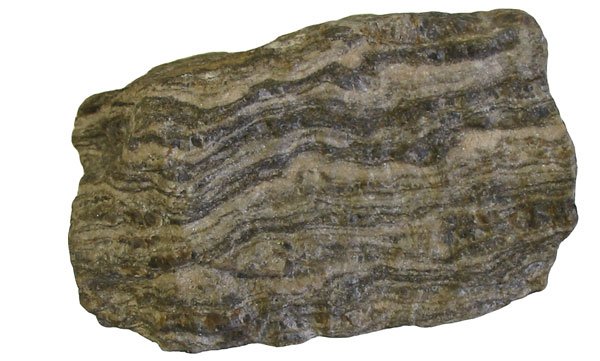
Gneiss (pronounced "nice") is a foliated metamorphic rock formed under the highest heat and pressure of this sequence — so intense that minerals separate into distinct light and dark bands, even though the rock never fully melted.
How can you identify gneiss?
Use several clues together.
One photograph shows one specimen, not every variation.
- 01Bold, coarse banding, alternating light (quartz/feldspar) and dark (mica/hornblende) layers
- 02Coarse-grained overall
- 03Bands are often somewhat irregular or streaky, rather than perfectly straight
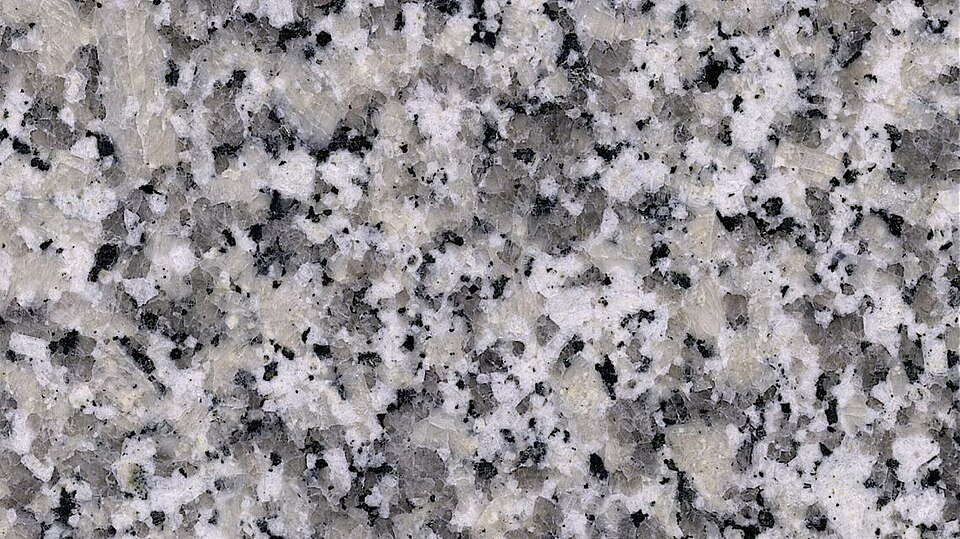
Similar at first glance.
Compare the materials side by side.
Photographs are not shown to the same scale.
Where it’s found.
Cores of major mountain ranges and ancient continental shields — among the oldest rock exposed at Earth's surface is gneiss.
More from this family.
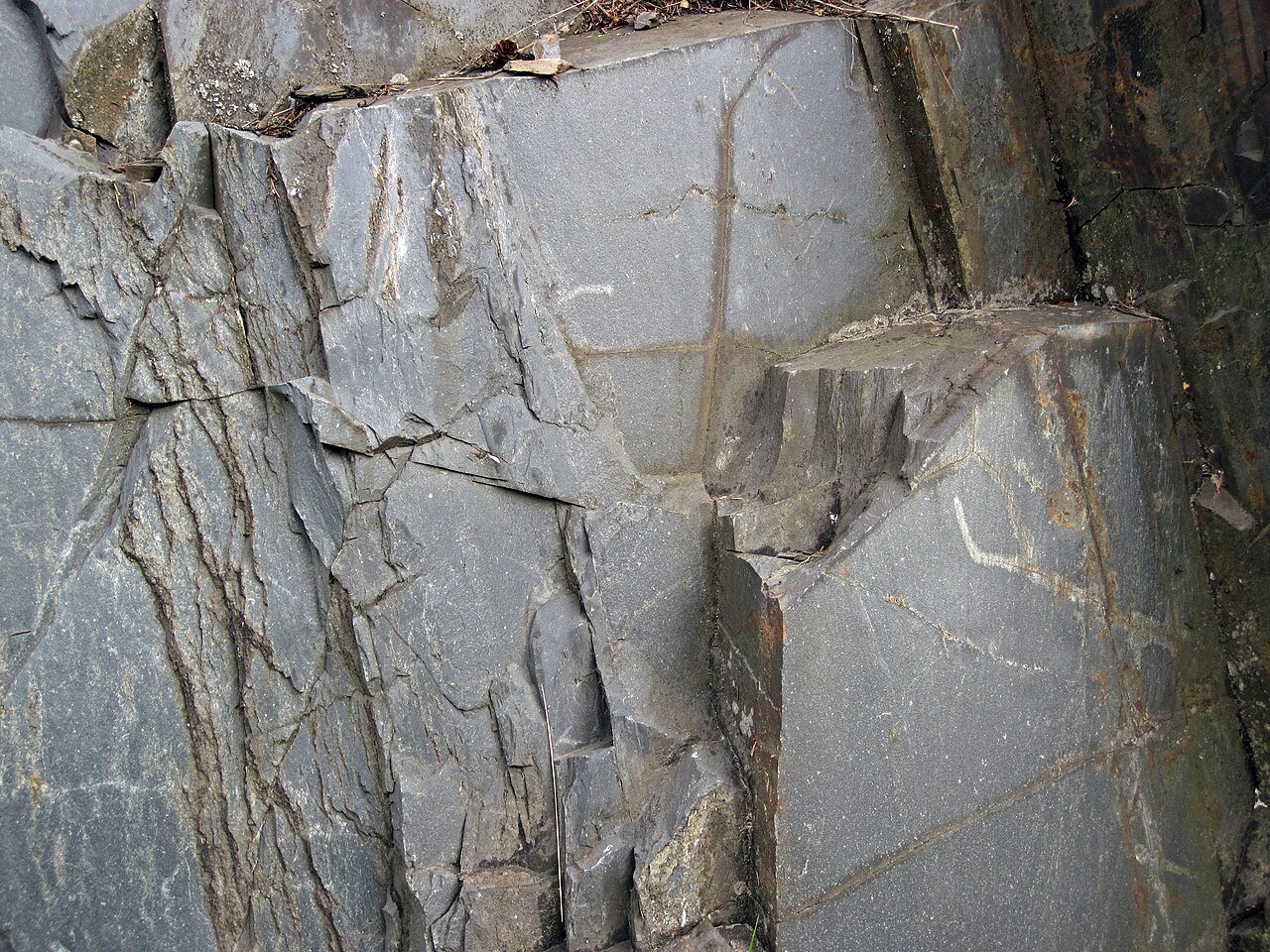
Slate
Splits into thin, flat, smooth sheets — even more cleanly than the shale it came from
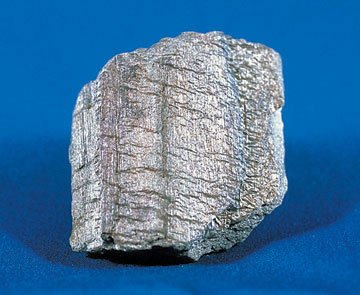
Phyllite
Distinctive silky/satiny sheen (from the small aligned mica crystals) — this is the fastest way to identify it
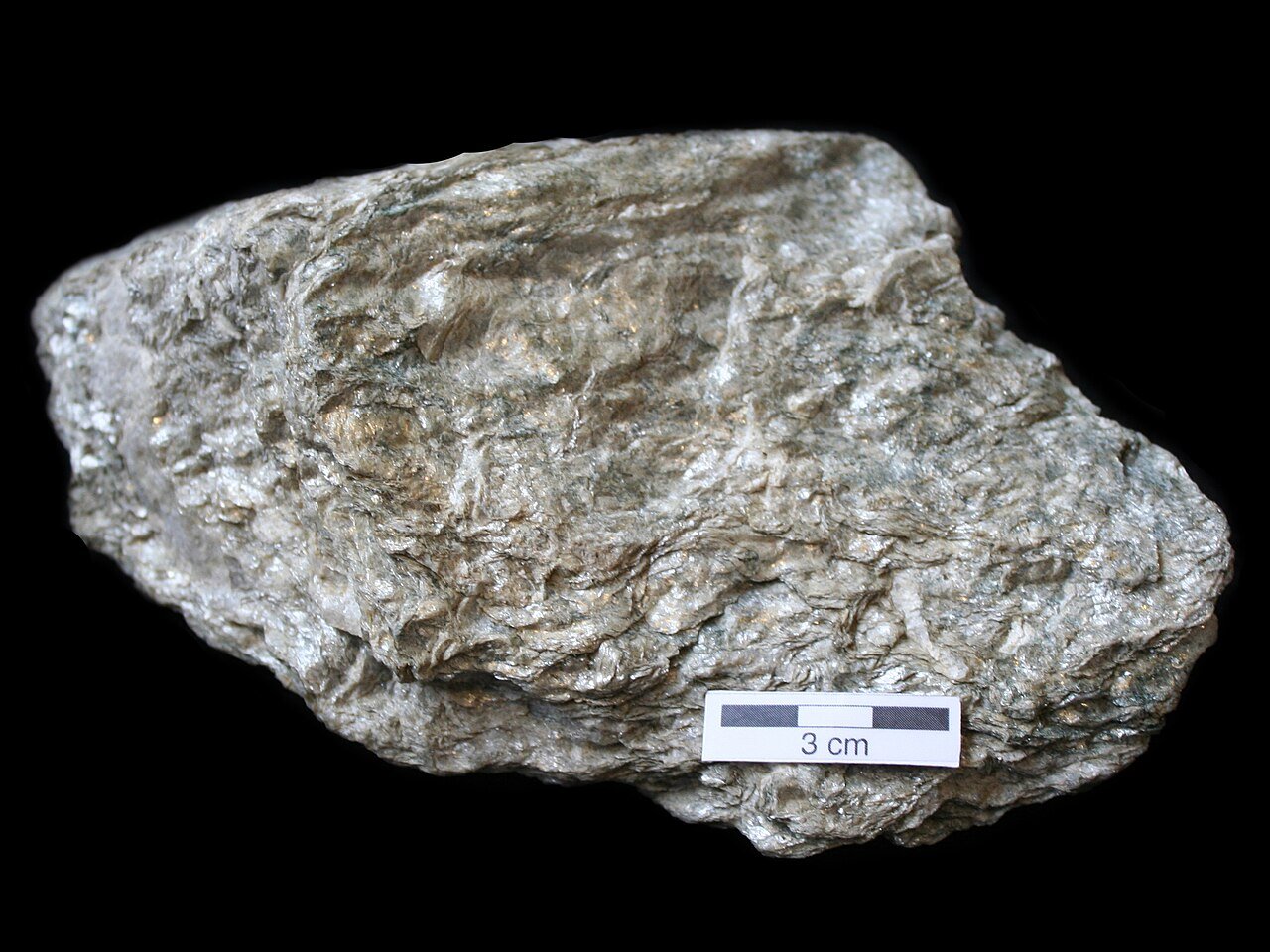
Schist
Visible, large, sparkly mica flakes (or other platy minerals) aligned in wavy layers