Metamorphic rocks.
The same rock. A new beginning. Explore 9 members of this rock family.
Changed under pressure.
Metamorphic rock starts out as something else — igneous, sedimentary, or even another metamorphic rock — and gets transformed by intense heat and/or pressure, without ever fully melting. (If it melts completely, it's not metamorphism anymore, it's just making new igneous rock.) The original minerals recrystallize, rearrange, or grow into new minerals entirely, in response to the conditions they're put under.
The biggest visual split within metamorphic rock comes down to pressure direction:
Foliated metamorphic rocks form under directional pressure — squeezed harder from one direction than others — which causes flat or elongated minerals to align in parallel bands or sheets. This gives foliated rock its layered, banded look. Slate, phyllite, schist, and gneiss are all foliated, and they actually represent an increasing sequence of heat/pressure intensity, in that order.
Non-foliated metamorphic rocks form under more even, all-directional pressure, or from source rock made of minerals that don't align into layers even under directional stress. These rocks look more uniform and crystalline, without banding. Marble and quartzite are the main examples.
Meet the family.
9 specimens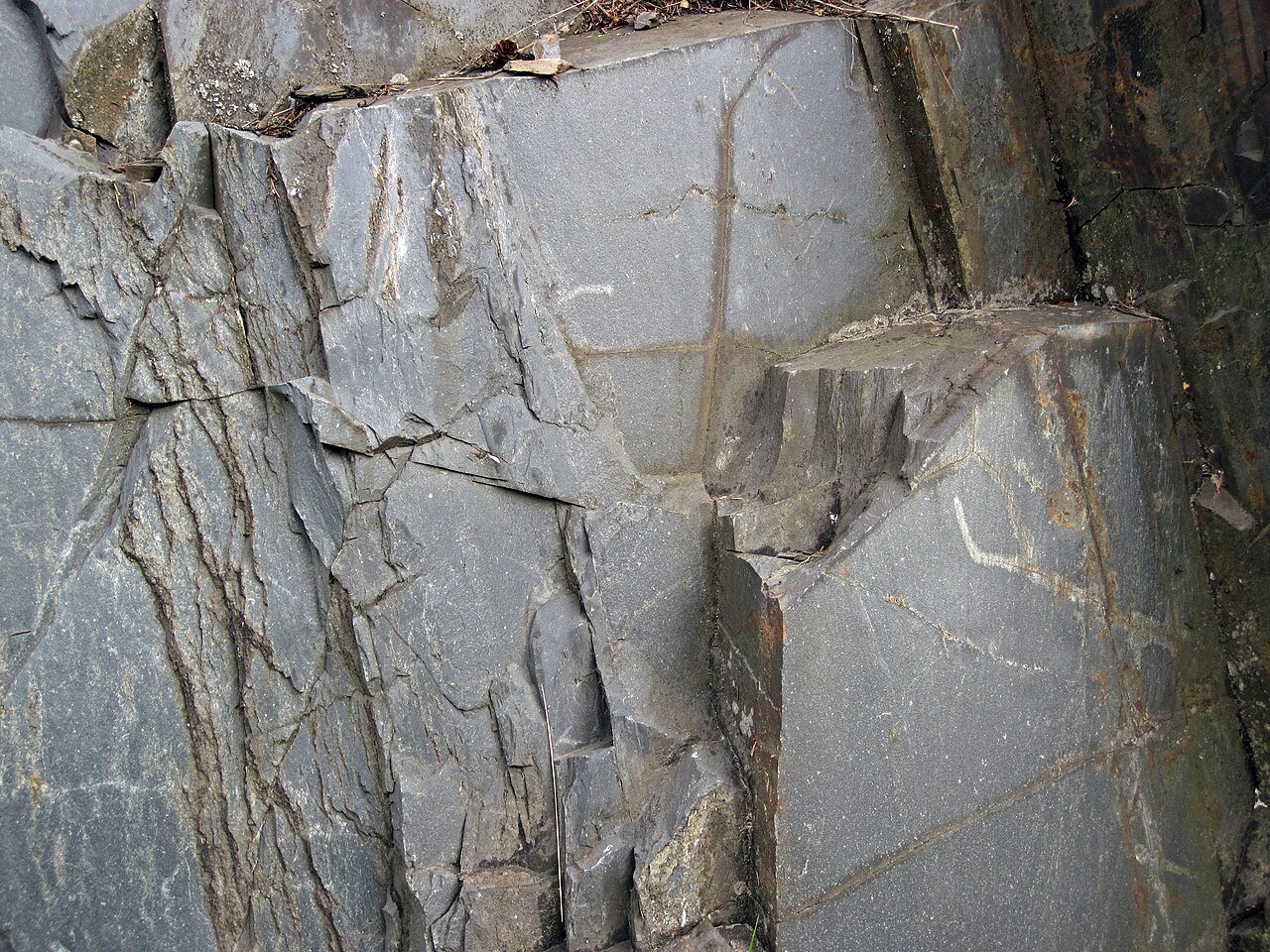
Slate
Splits into thin, flat, smooth sheets — even more cleanly than the shale it came from
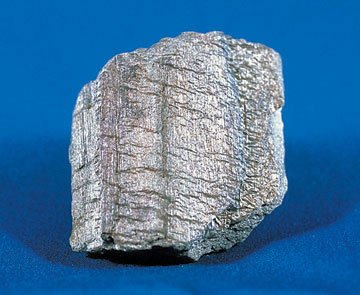
Phyllite
Distinctive silky/satiny sheen (from the small aligned mica crystals) — this is the fastest way to identify it
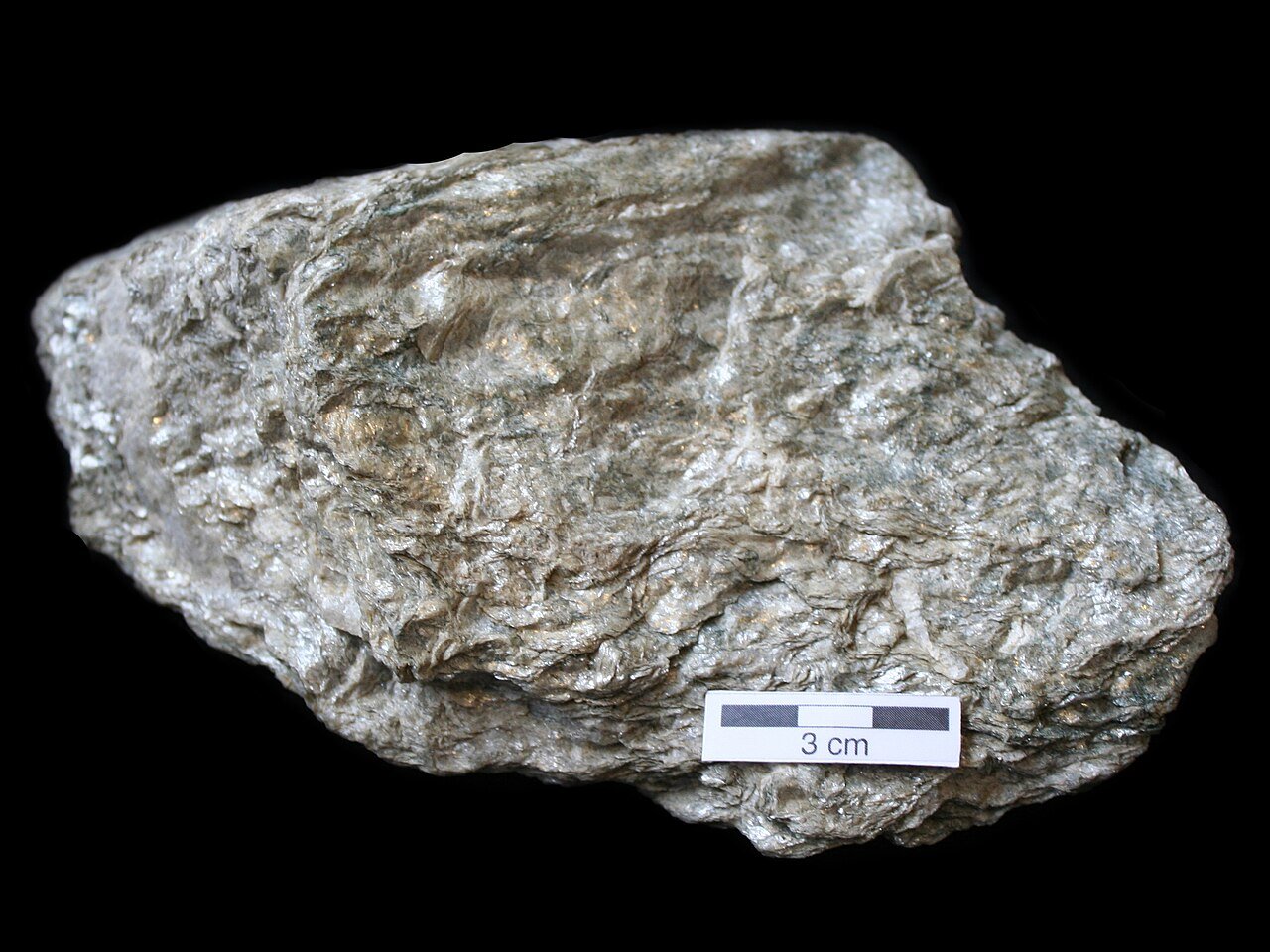
Schist
Visible, large, sparkly mica flakes (or other platy minerals) aligned in wavy layers
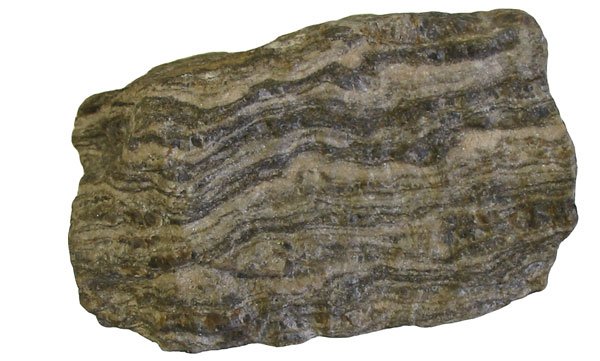
Gneiss
Bold, coarse banding, alternating light (quartz/feldspar) and dark (mica/hornblende) layers
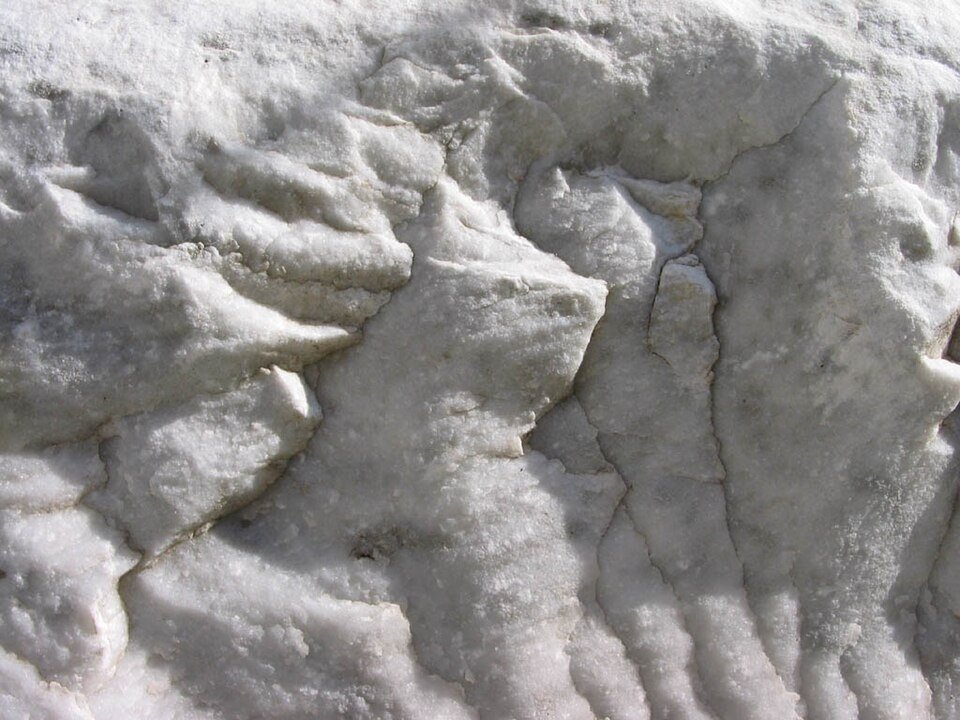
Marble
Crystalline, sugary-looking texture when broken
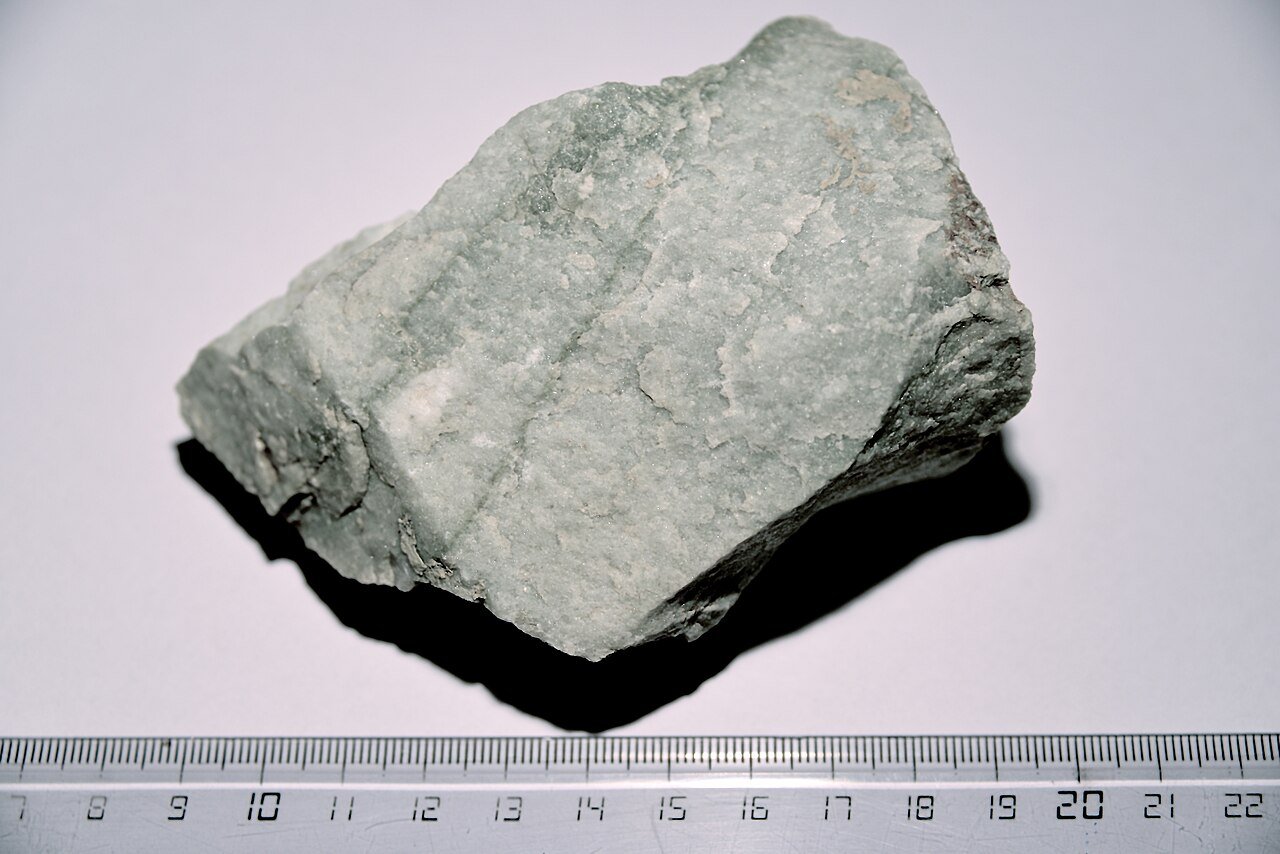
Quartzite
Very hard (7, like quartz) — resists scratching

Hornfels
Very fine-grained — individual crystals are far too small to see without a microscope
Amphibolite
Dark: black to dark green
Serpentinite
Green to greenish-black, sometimes mottled or streaked