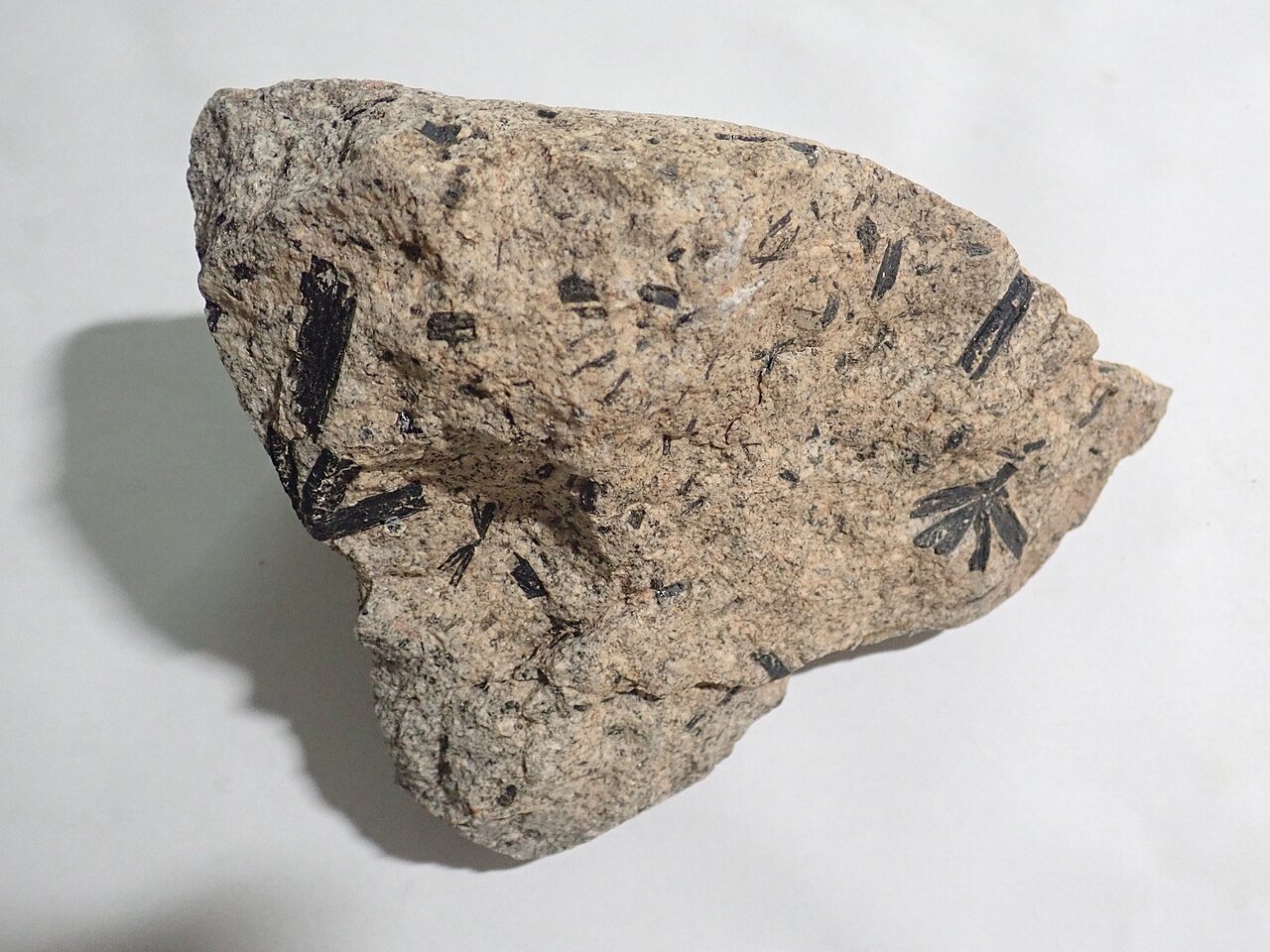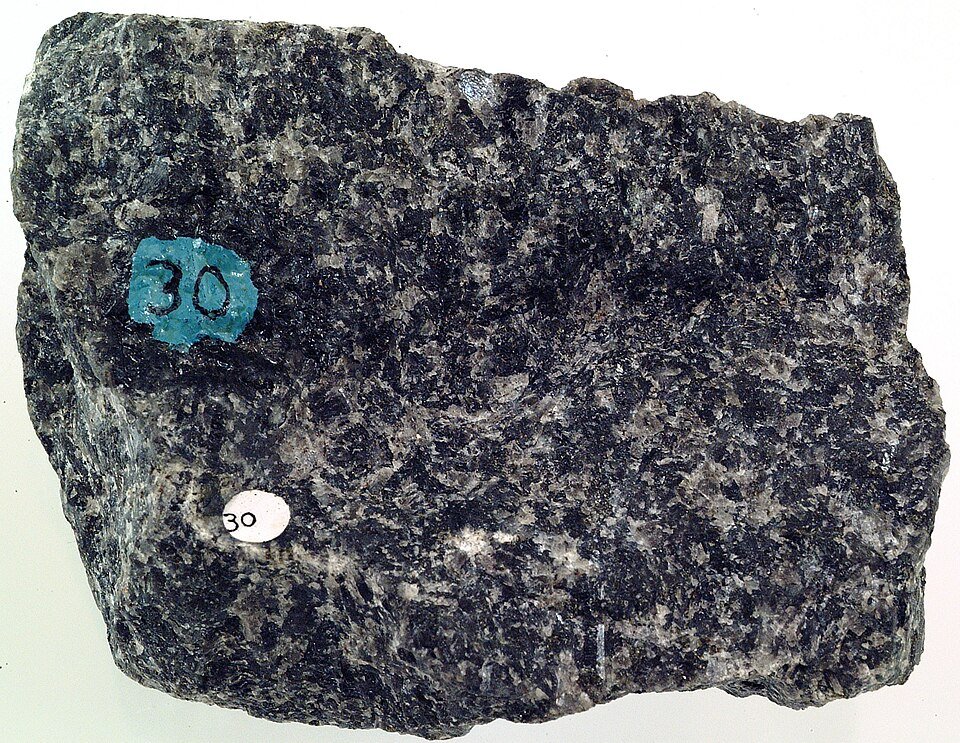
Igneous / Specimen 01

Granite.

How to identify it

Coarse-grained — individual mineral crystals are visible to the naked eye
Explore the igneous family ↗
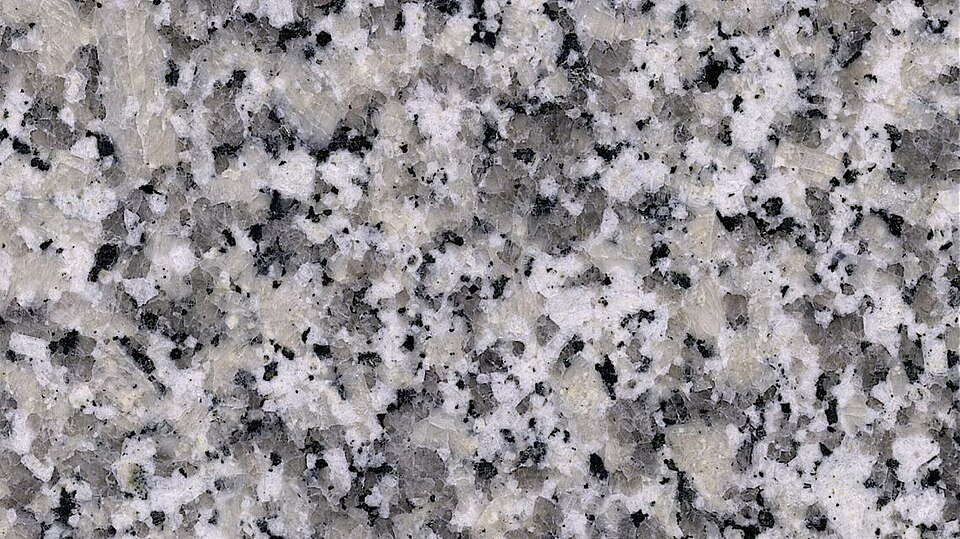
Close-up of granite with interlocking white, gray, and black mineral grains
The stone gate · CC BY-SA 4.0 · Image source ↗
01 / Origin story

How does granite form?

Granite is an intrusive igneous rock — it forms when magma cools slowly, deep underground, over very long timescales. That slow cooling is why granite has such distinctly visible crystals; the minerals had time to grow large before the rock fully solidified.

02 / Read the clues

How can you identify granite?

Use several clues together.
One photograph shows one specimen, not every variation.

Enlarged crop of the Granite specimen
Texture study · enlarged crop of this specimen
  1. 01Coarse-grained — individual mineral crystals are visible to the naked eye
  2. 02Typically light-colored: shades of pink, gray, or white, often speckled with black
  3. 03Hard — will scratch glass
  4. 04Made mostly of quartz and feldspar, with some mica or hornblende giving it darker flecks
03 / Commonly confused with

Similar at first glance.

Compare the materials side by side.
Photographs are not shown to the same scale.

Granite specimen for comparison

Granite ↗

Coarse-grained — individual mineral crystals are visible to the naked eye

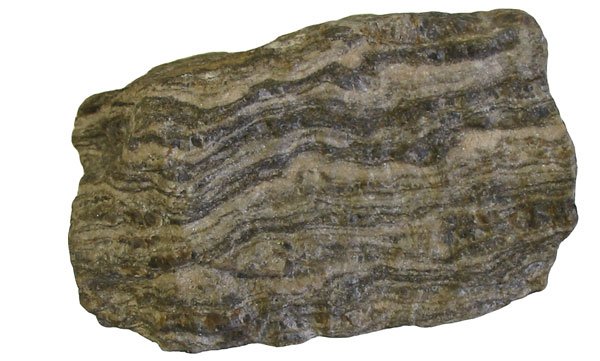
Gneiss specimen for comparison

Gneiss ↗

Bold, coarse banding, alternating light (quartz/feldspar) and dark (mica/hornblende) layers

Gneiss (a metamorphic rock) — both can look similarly speckled and coarse-grained, but gneiss has visible banding/layering from being deformed under pressure, while granite's crystals are randomly arranged with no banding.

04 / Out in the world

Where it’s found.

Common throughout continental crust worldwide — mountain ranges, quarries, and as a common building/countertop stone since it's so hard and durable.

Continue exploring
More from this family.