Your place. A different planet.
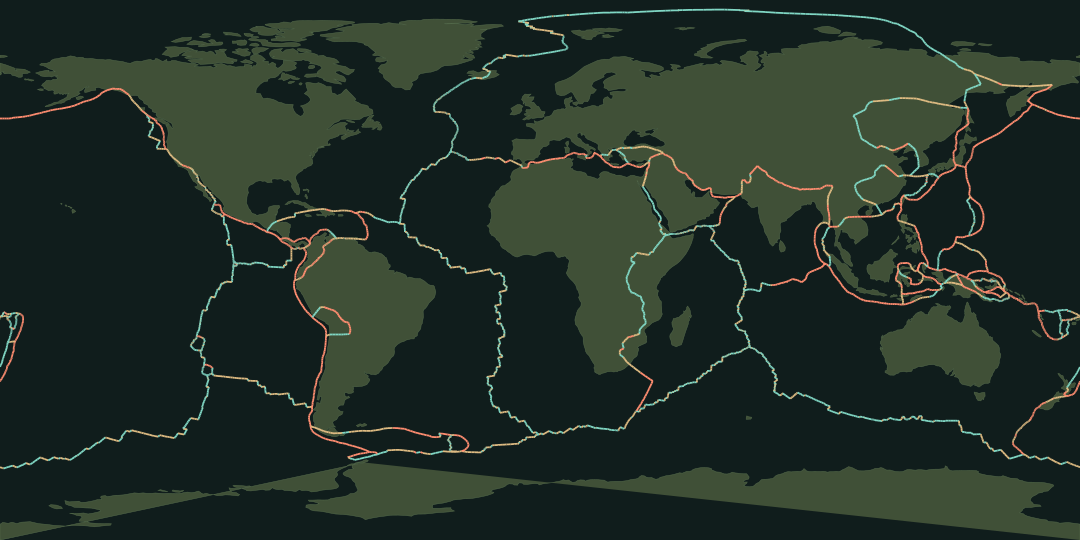
See where your location travelled across geologic time with a deep-time globe.
Follow the forces that shape our planet.
Discover the stories hidden in stone.
Follow the connections between moving plates, rising mountains, and the rocks beneath your feet.
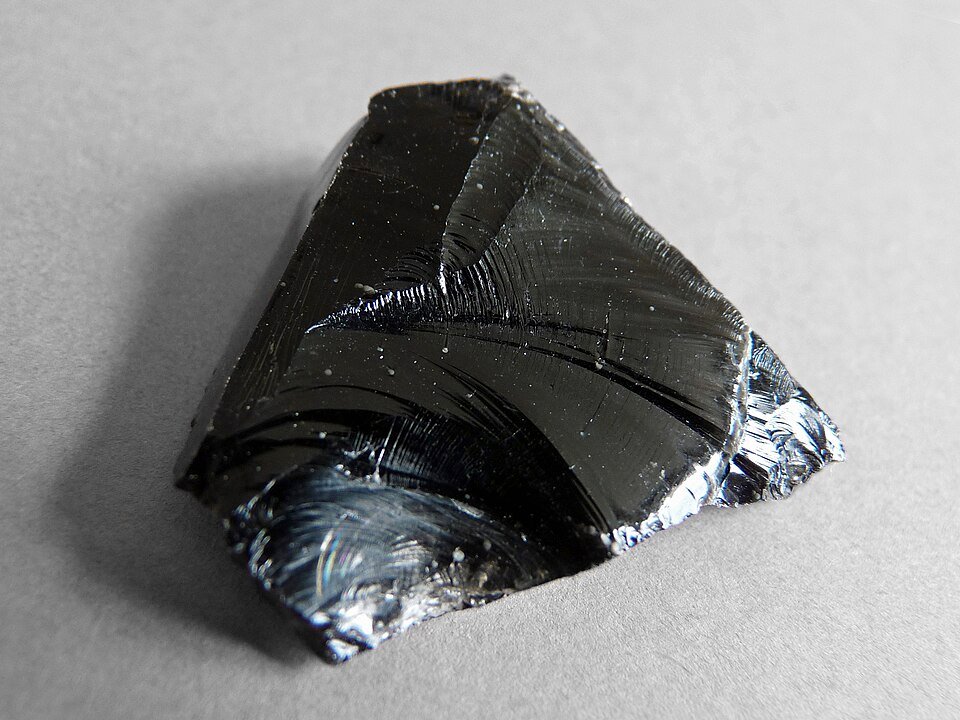
From cooled lava to ancient seafloors.
34 rocks. Three very different beginnings.
Every rock on Earth is temporary. Given enough time — millions of years, usually — any rock can become any other kind of rock. That's the whole idea behind the rock cycle: it's not a one-way process, it's a loop, with multiple paths a piece of material can take depending on what happens to it.
Here's the cycle, in plain terms:
Igneous rock starts as magma, deep underground. When magma cools and hardens — slowly underground (intrusive) or quickly at the surface (extrusive) — it becomes solid igneous rock.
From there, if that rock is exposed at the surface, weathering and erosion slowly break it down into loose sediment — sand, silt, clay, gravel — which gets carried off by water, wind, or ice and deposited somewhere else.
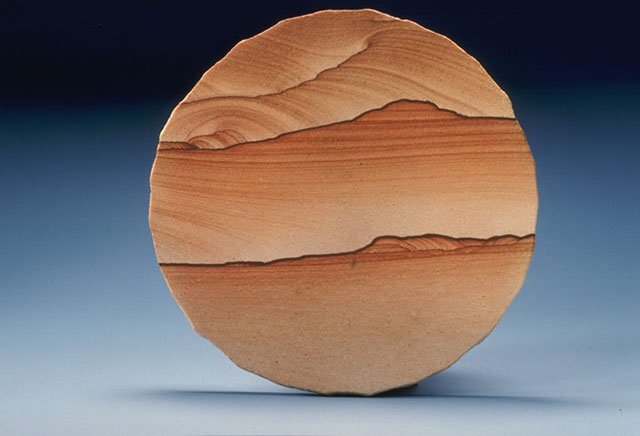
That loose sediment, buried and compacted over time, with minerals cementing the particles together, becomes sedimentary rock.
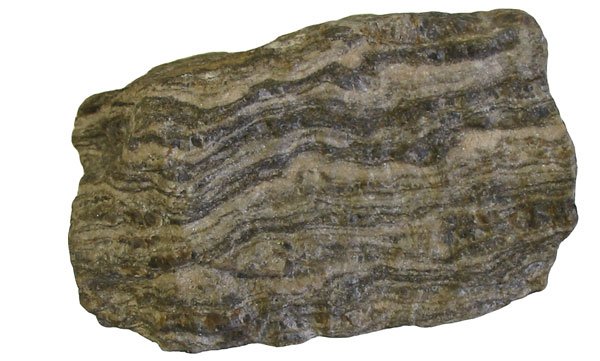
Now, any rock — igneous, sedimentary, or even another metamorphic rock — that gets subjected to intense heat and pressure without fully melting gets transformed into metamorphic rock. Its minerals recrystallize and rearrange in response to those new conditions, without ever becoming liquid.
And if a rock — any of the three types — gets pushed deep enough, or gets hot enough, to fully melt, it becomes magma again, and the cycle starts over.
That's the important thing to understand: there's no required order and no "starting point." A rock sitting under your feet right now might be on its third or fourth trip around this cycle, having been igneous, then sedimentary, then metamorphic, over hundreds of millions of years. The only rule is that everything eventually recycles — nothing is permanent on a geologic timescale, not even rock.
See where your location travelled across geologic time with a deep-time globe.
A camera-assisted rock guide, with the visual clues behind each suggested identification.