Igneous / Specimen 05

Peridotite.

How to identify it

Coarse-grained

Explore the igneous family ↗
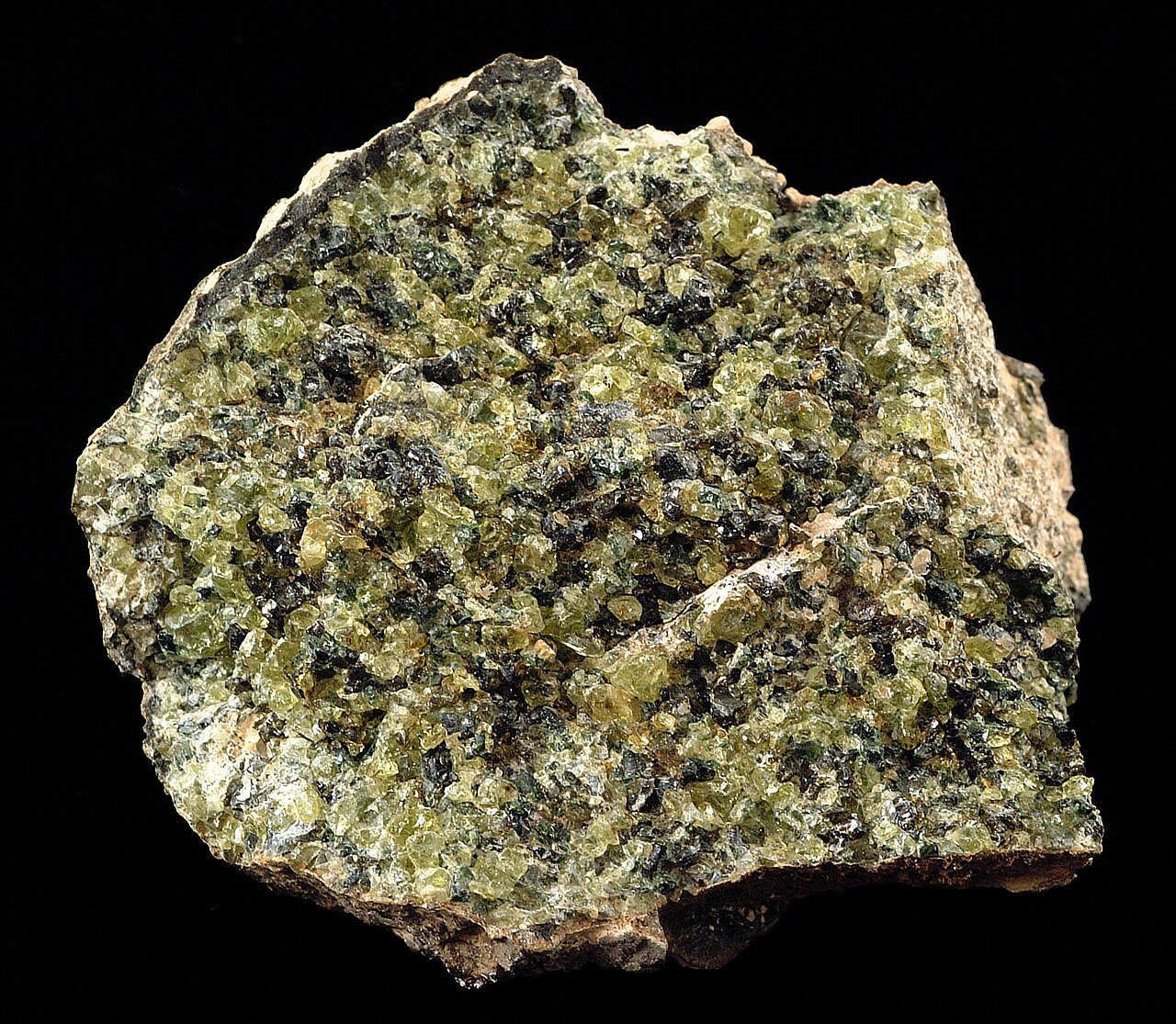
Peridotite specimen with green olivine among darker mineral grains
Shannon Heinle · CC0 · Image source ↗
01 / Origin story

How does peridotite form?

Peridotite is an intrusive igneous rock that crystallizes at very high temperatures from magma sourced deep in the Earth's mantle — it's essentially a sample of mantle rock, rarely seen at the surface except where tectonic forces have pushed mantle material upward.

02 / Read the clues

How can you identify peridotite?

Use several clues together.
One photograph shows one specimen, not every variation.

Enlarged crop of the Peridotite specimen
Texture study · enlarged crop of this specimen
  1. 01Coarse-grained
  2. 02Distinctive olive-green to dark green color (its main mineral, olivine, is gem-quality peridot when clear)
  3. 03Very dense, almost no quartz or feldspar at all — dominated by olivine and pyroxene
03 / Commonly confused with

A distinctive combination.

Not easily confused with much else — the green color from olivine is fairly distinctive once you know to look for it. Weathered surfaces can turn brownish, which sometimes throws people off.

04 / Out in the world

Where it’s found.

Rare at the surface — mainly in ophiolites (chunks of ocean floor/mantle thrust onto continents) and volcanic pipes that brought mantle material up quickly (some of which are diamond-bearing kimberlite pipes).

Continue exploring
More from this family.