Igneous / Specimen 03

Diorite.

How to identify it

Coarse-grained, crystals clearly visible

Explore the igneous family ↗
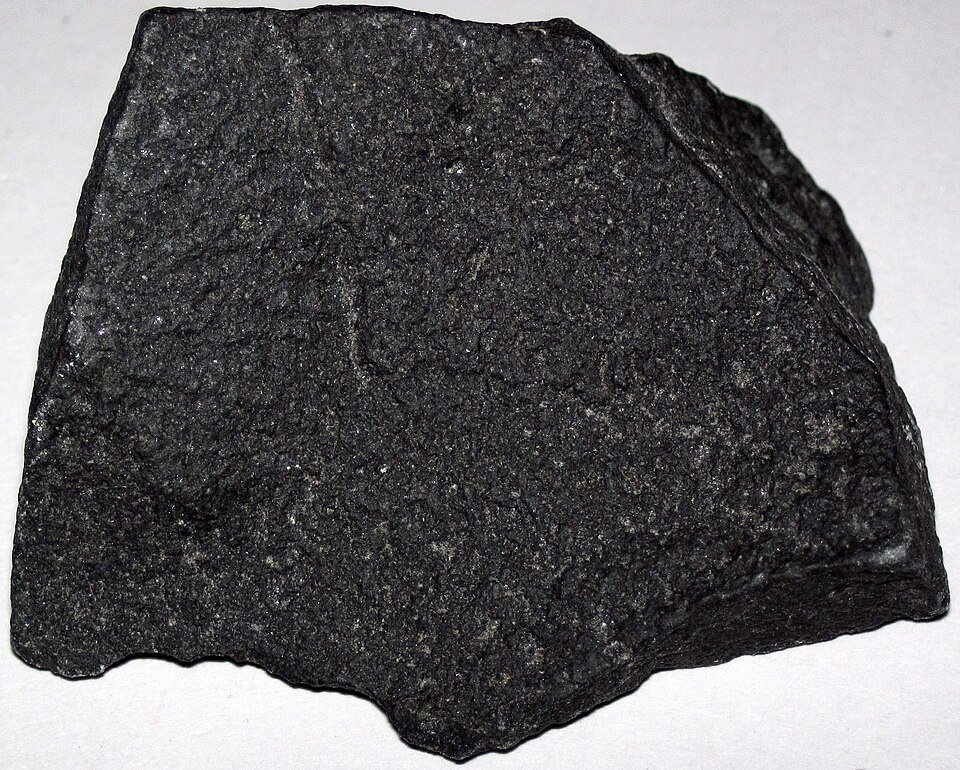
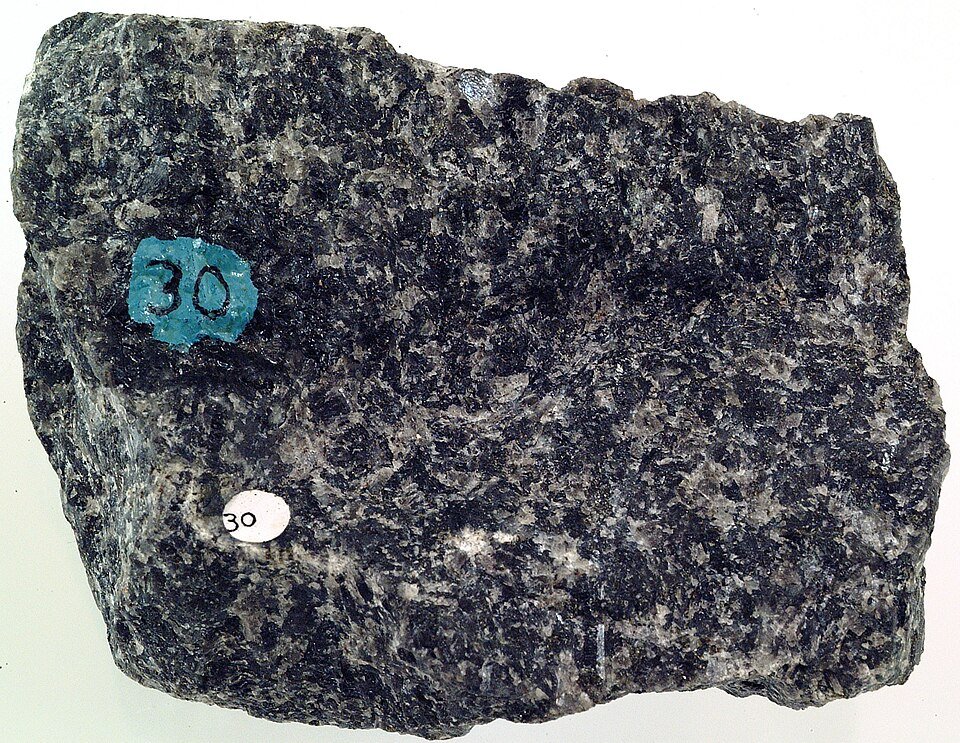
Diorite specimen showing contrasting light minerals and dark crystals
Kent G. Budge · CC BY 4.0 · Image source ↗
01 / Origin story

How does diorite form?

Diorite is an intrusive igneous rock, cooling slowly underground like granite — but with a different chemical mix, roughly halfway between granite and gabbro in composition. That slow cooling gives it the same coarse, visible-crystal texture as granite.

02 / Read the clues

How can you identify diorite?

Use several clues together.
One photograph shows one specimen, not every variation.

Enlarged crop of the Diorite specimen
Texture study · enlarged crop of this specimen
  1. 01Coarse-grained, crystals clearly visible
  2. 02Distinctive "salt and pepper" look — speckled black and white, generally darker overall than granite
  3. 03Made mostly of plagioclase feldspar (white/gray) and dark minerals like hornblende or biotite (black), with little to no quartz
03 / Commonly confused with

Similar at first glance.

Compare the materials side by side.
Photographs are not shown to the same scale.
Diorite specimen for comparison

Diorite ↗

Coarse-grained, crystals clearly visible

Granite specimen for comparison

Granite ↗

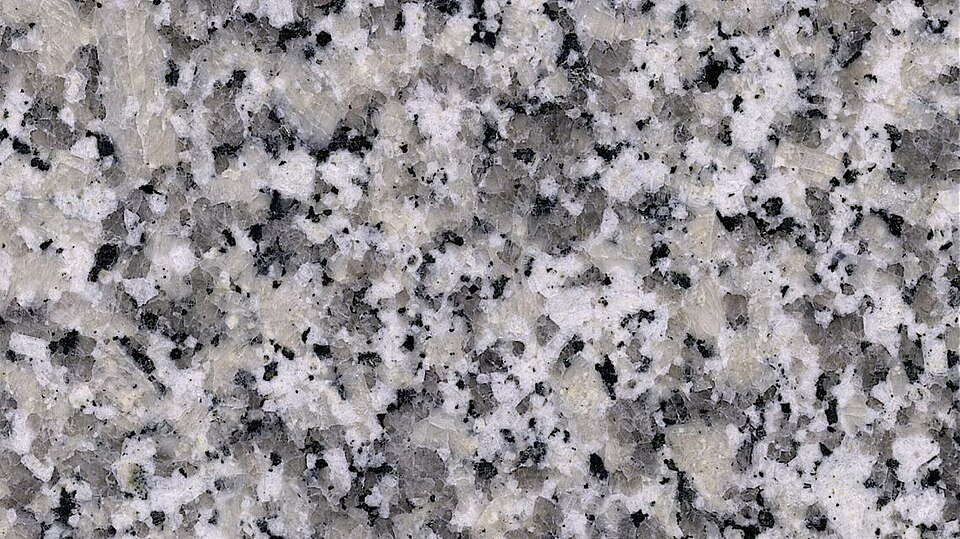
Coarse-grained — individual mineral crystals are visible to the naked eye

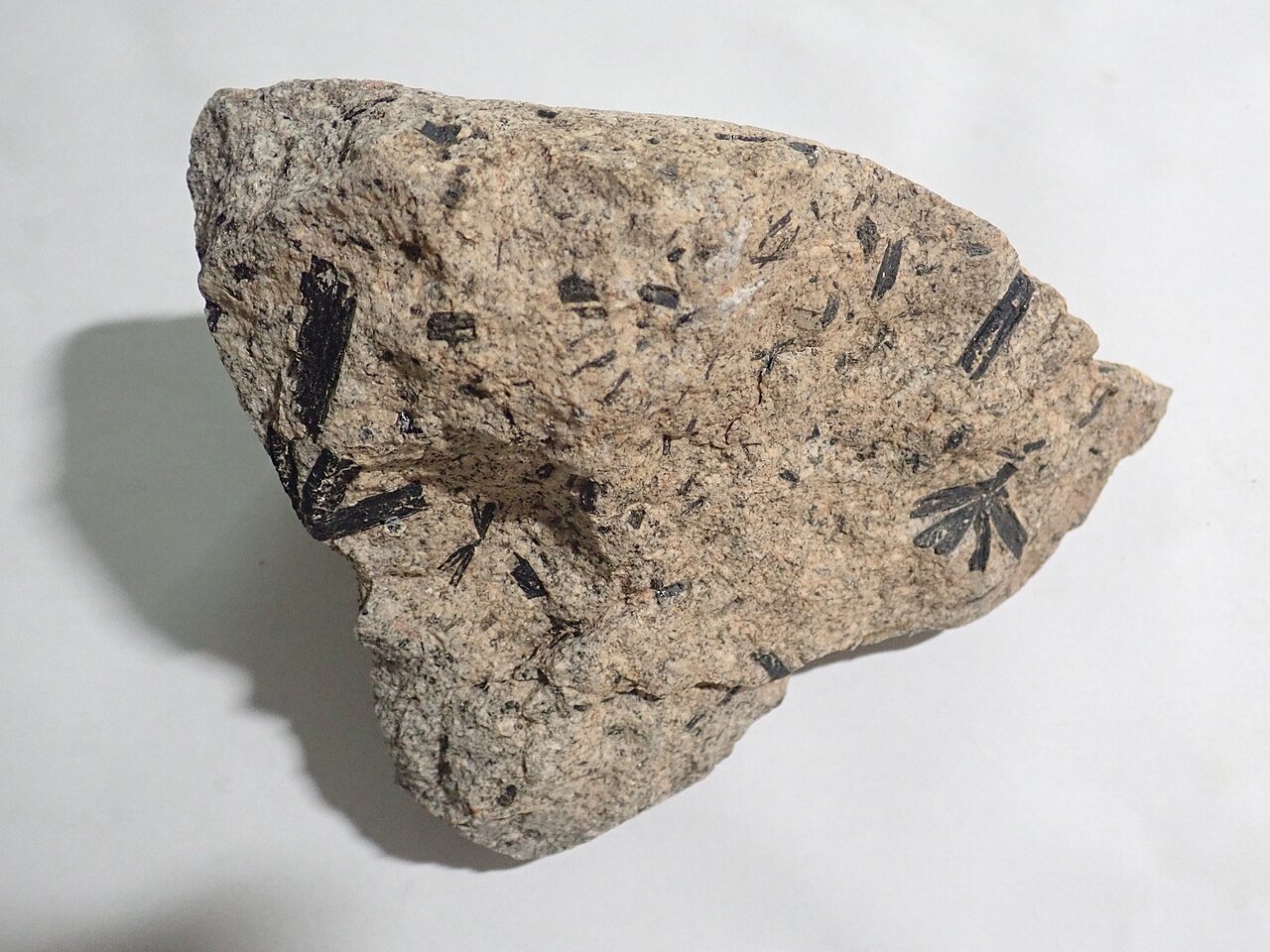
Granite — the quickest tell is color balance. Granite is dominantly light-colored with some dark flecks; diorite is a much more even, salt-and-pepper mix of black and white, and lacks granite's light pink or tan quartz-rich look.

04 / Out in the world

Where it’s found.

Common in continental mountain belts, often found alongside granite in the same intrusive rock bodies.

Continue exploring

More from this family.