Igneous / Specimen 02

Basalt.

How to identify it

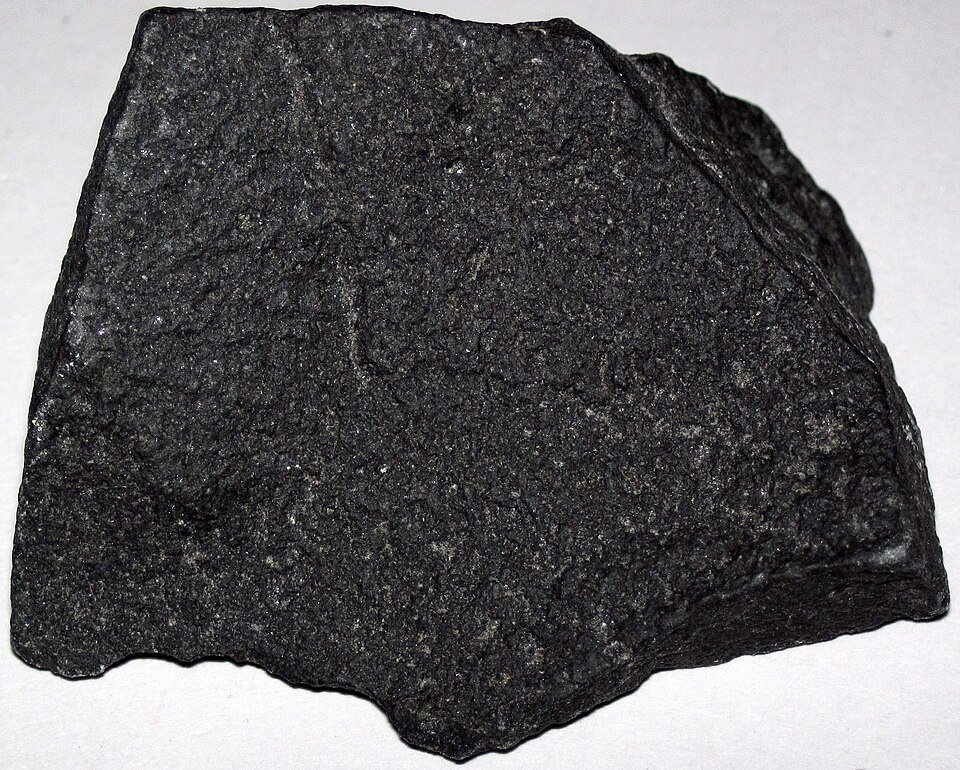
Fine-grained — crystals are too small to see individually, often looks almost glassy or dull

Explore the igneous family ↗
Dark basalt specimen with a fine-grained, rough surface
James St. John · CC BY 2.0 · Image source ↗
01 / Origin story

How does basalt form?

Basalt is an extrusive igneous rock, formed when lava cools quickly at the Earth's surface. It's the most common volcanic rock on the planet — most of the ocean floor is basalt, formed continuously at mid-ocean ridges where new crust is created.

02 / Read the clues

How can you identify basalt?

Use several clues together.
One photograph shows one specimen, not every variation.

Enlarged crop of the Basalt specimen
Texture study · enlarged crop of this specimen
  1. 01Fine-grained — crystals are too small to see individually, often looks almost glassy or dull
  2. 02Dark colored: black, dark gray, or dark green
  3. 03Often has small round holes (vesicles) where gas bubbles were trapped as it cooled
  4. 04Heavy for its size
03 / Commonly confused with

Similar at first glance.

Compare the materials side by side.
Photographs are not shown to the same scale.
Basalt specimen for comparison

Basalt ↗

Fine-grained — crystals are too small to see individually, often looks almost glassy or dull

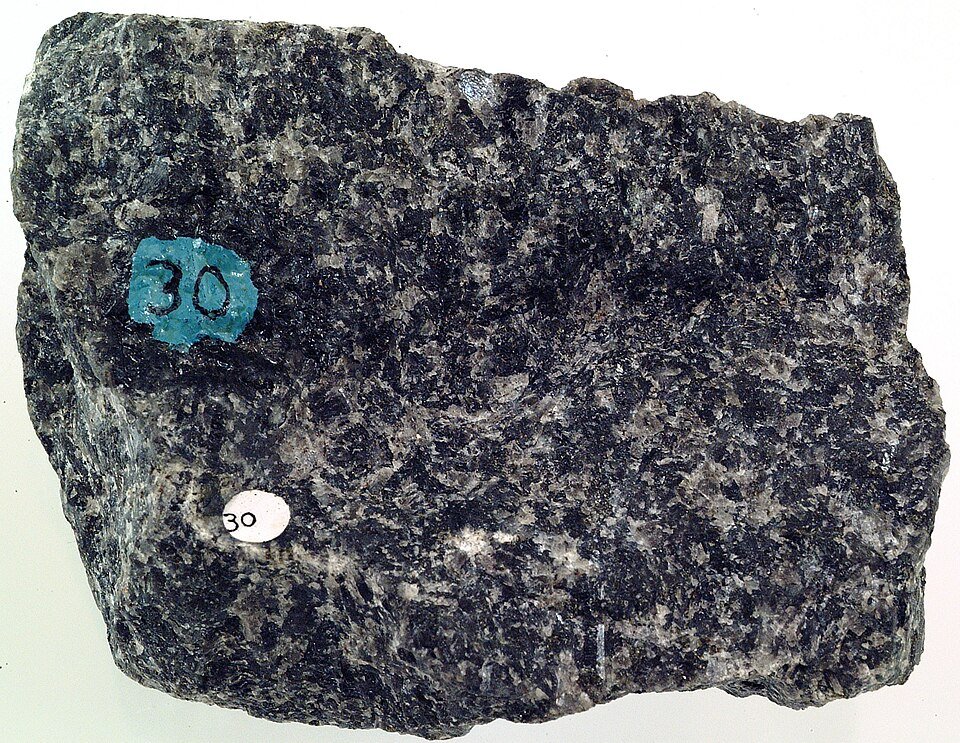
Gabbro specimen for comparison

Gabbro ↗

Coarse-grained, like granite or diorite, but dark

Gabbro — chemically nearly identical to basalt, but gabbro cooled slowly underground (intrusive) so it has large visible crystals, while basalt cooled fast at the surface and stays fine-grained. Same recipe, different cooling speed, same relationship as granite/rhyolite.

04 / Out in the world

Where it’s found.

Volcanic regions worldwide — Hawaii, Iceland, the Pacific Northwest (Columbia River Basalt), and virtually the entire ocean floor.

Continue exploring

More from this family.