Igneous rocks.
Melted. Cooled. Crystallized. Explore 13 members of this rock family.
Born from fire.
Igneous rocks start out as molten rock — magma below the surface, or lava once it reaches the surface — and form when that melted rock cools and hardens into solid crystals. The single biggest thing that determines what an igneous rock looks like isn't what it's made of, it's how fast it cooled.
Magma trapped deep underground cools slowly, sometimes over thousands of years. That slow cooling gives minerals time to grow into large, visible crystals — these are called intrusive (or plutonic) rocks. Granite is the classic example: look closely and you can actually see the individual mineral grains.
Lava that erupts and cools at the surface, by contrast, cools fast — sometimes in minutes. There's no time for large crystals to form, so these extrusive (or volcanic) rocks are fine-grained, sometimes so fine you can't see individual crystals at all. Basalt is the most common example on Earth — most of the ocean floor is basalt.
Same basic ingredients, wildly different rock, just from cooling speed. That's the thing worth remembering about igneous rock.
Meet the family.
13 specimens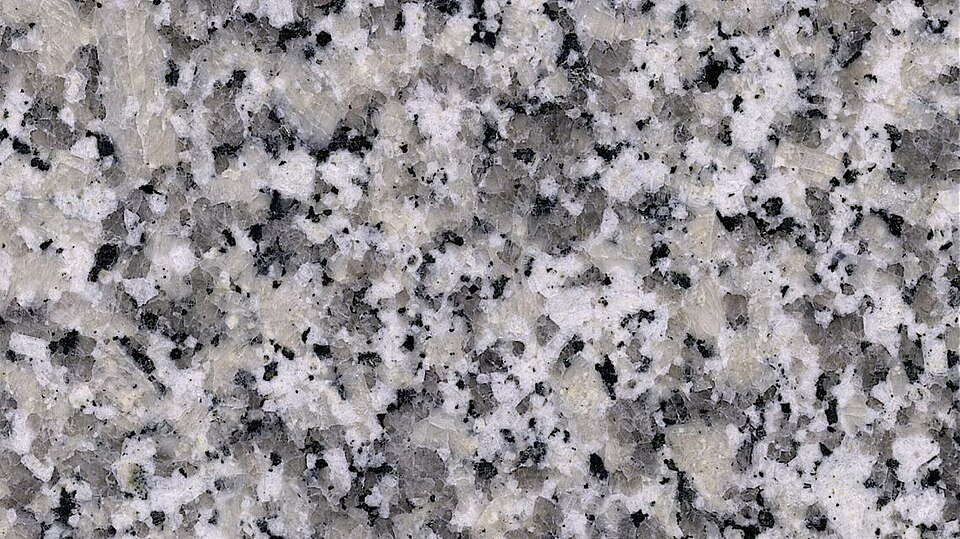
Granite
Coarse-grained — individual mineral crystals are visible to the naked eye
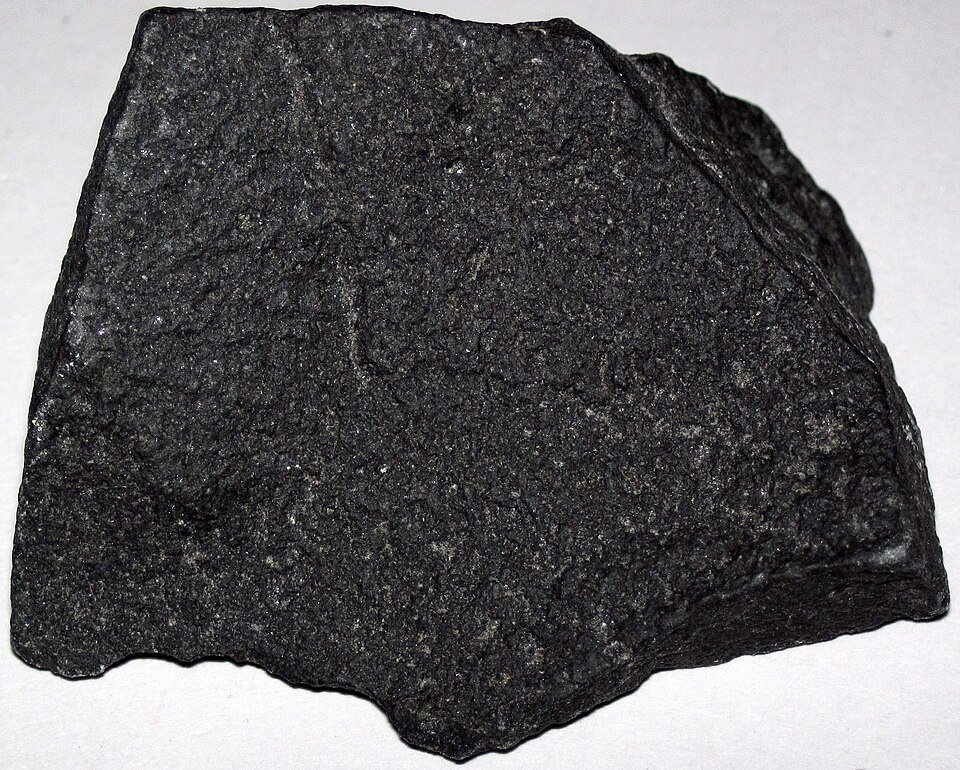
Basalt
Fine-grained — crystals are too small to see individually, often looks almost glassy or dull
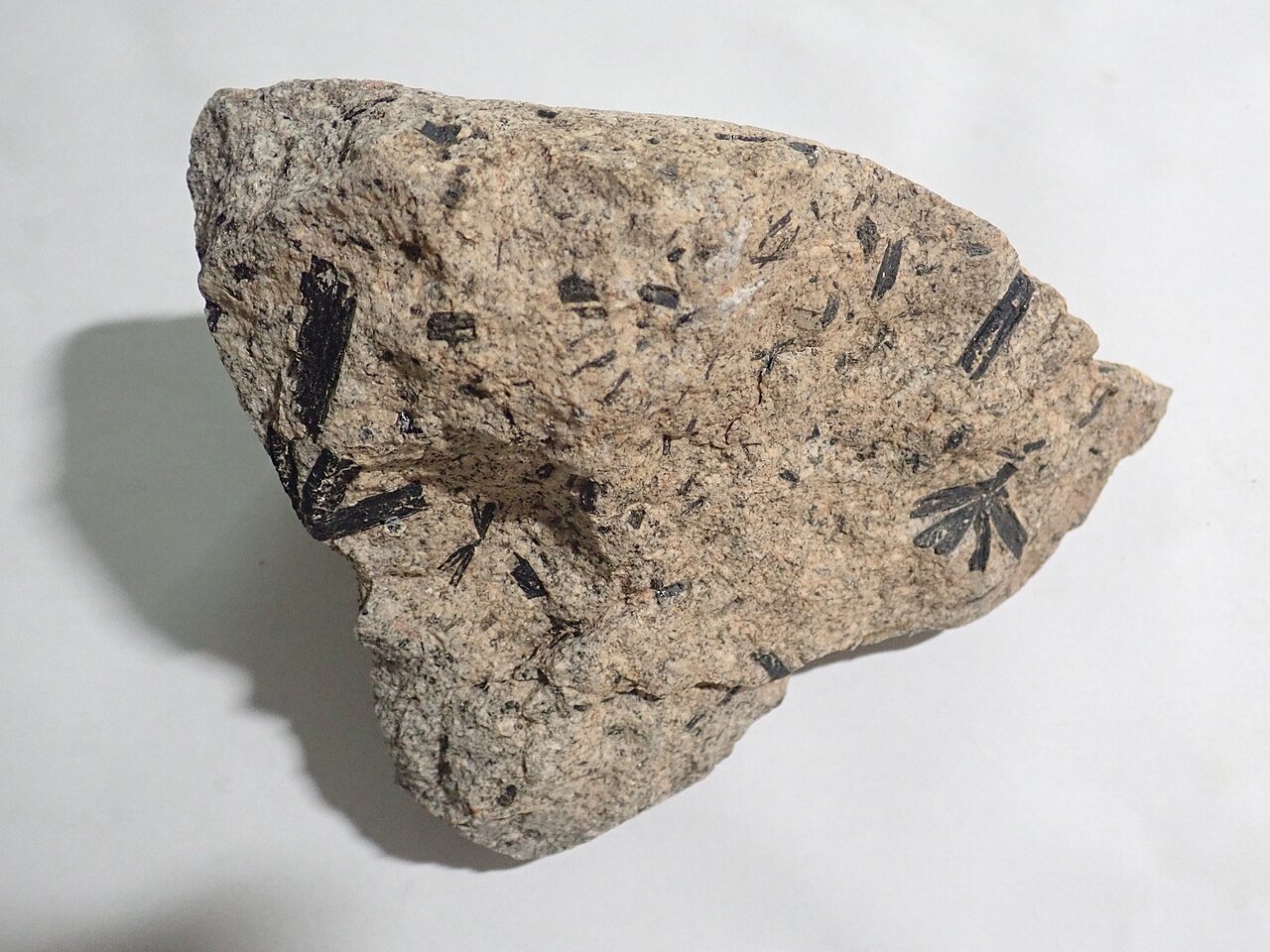
Diorite
Coarse-grained, crystals clearly visible
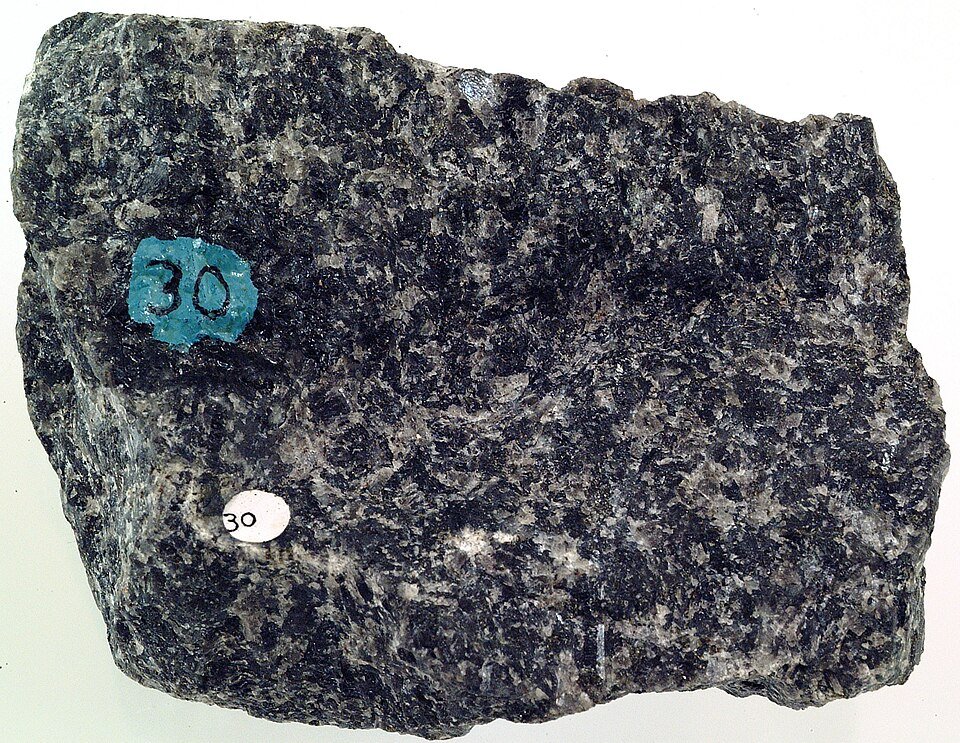
Gabbro
Coarse-grained, like granite or diorite, but dark
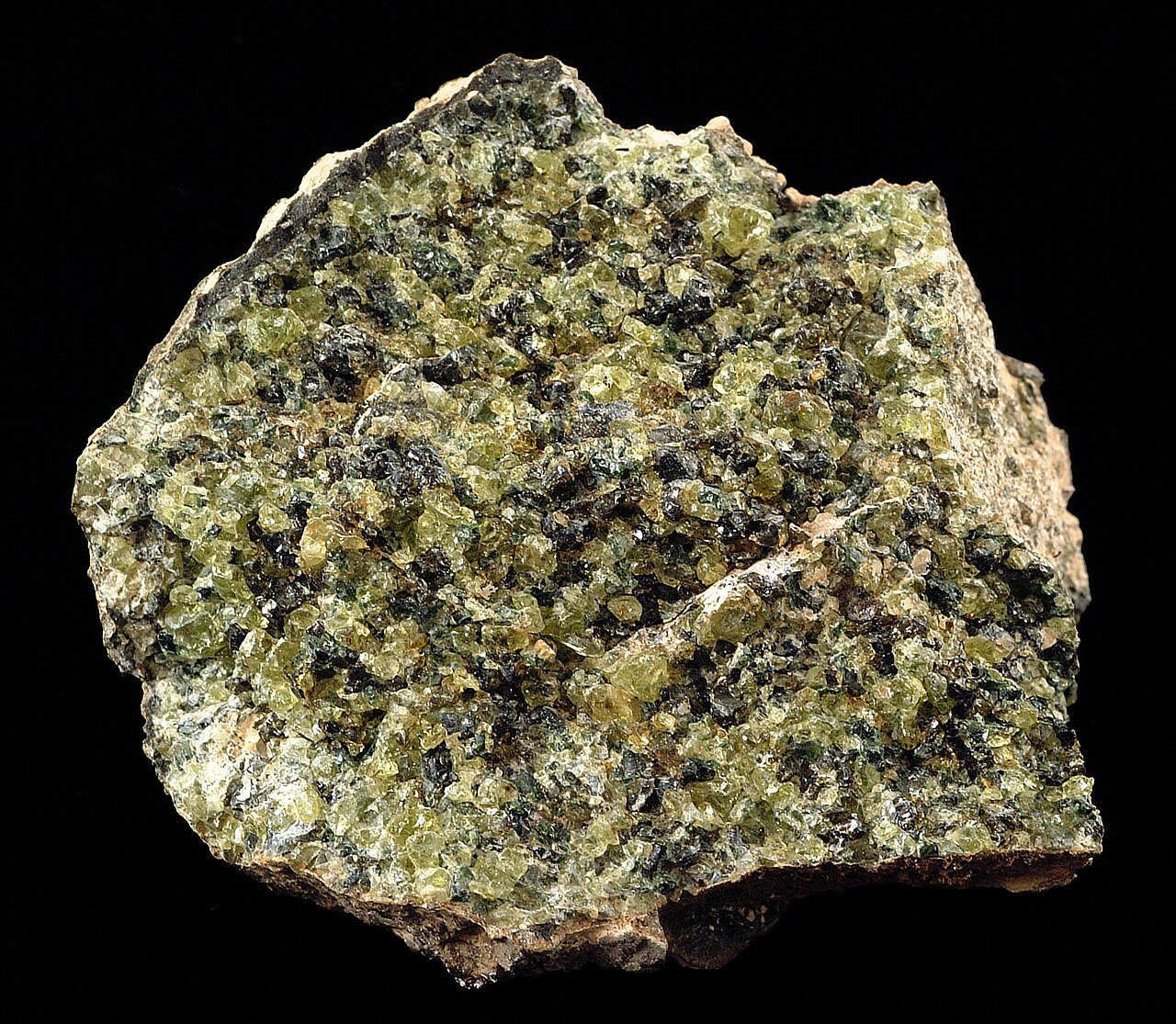
Peridotite
Coarse-grained
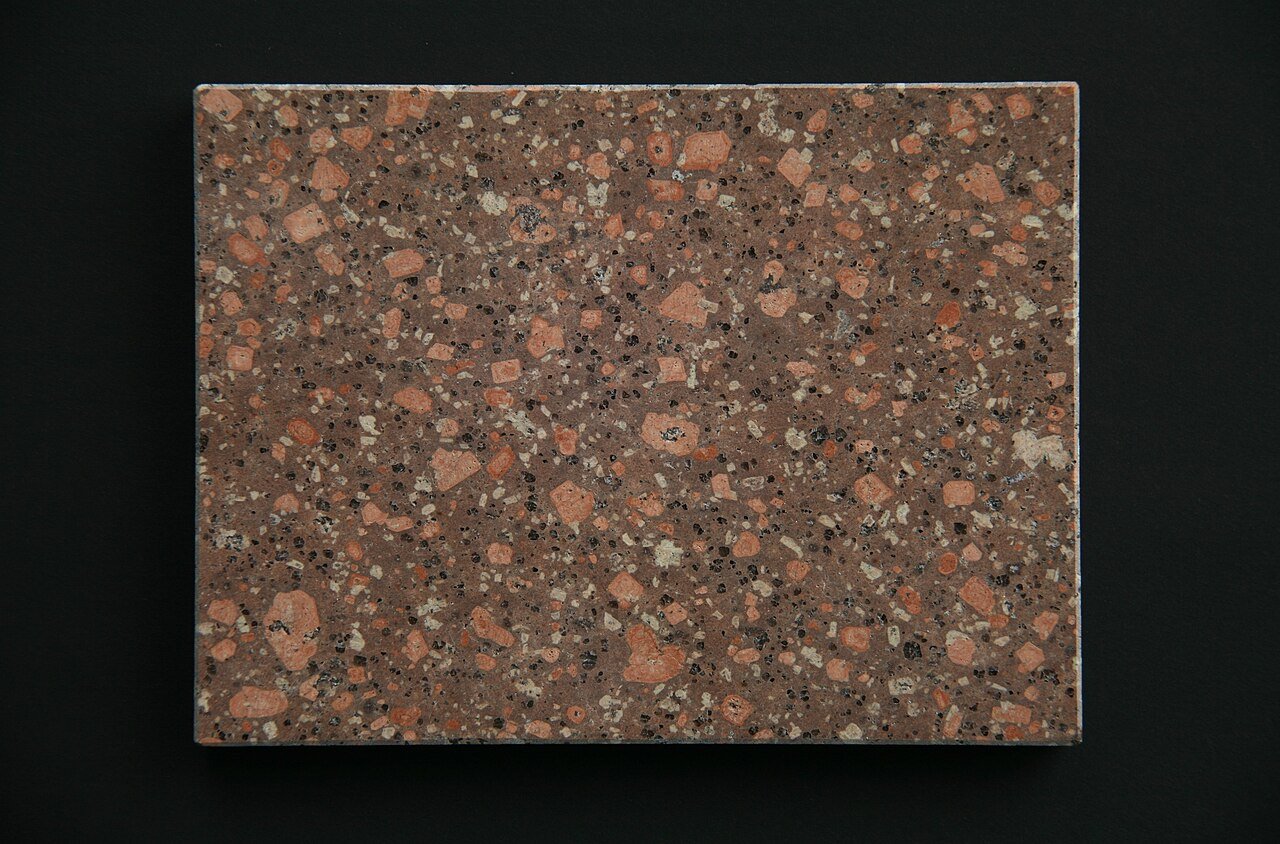
Rhyolite
Fine-grained, sometimes with a few larger crystals scattered in a fine matrix
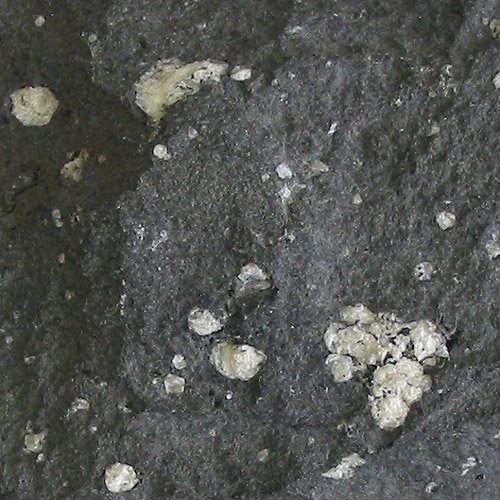
Andesite
Fine-grained, medium gray to greenish-gray
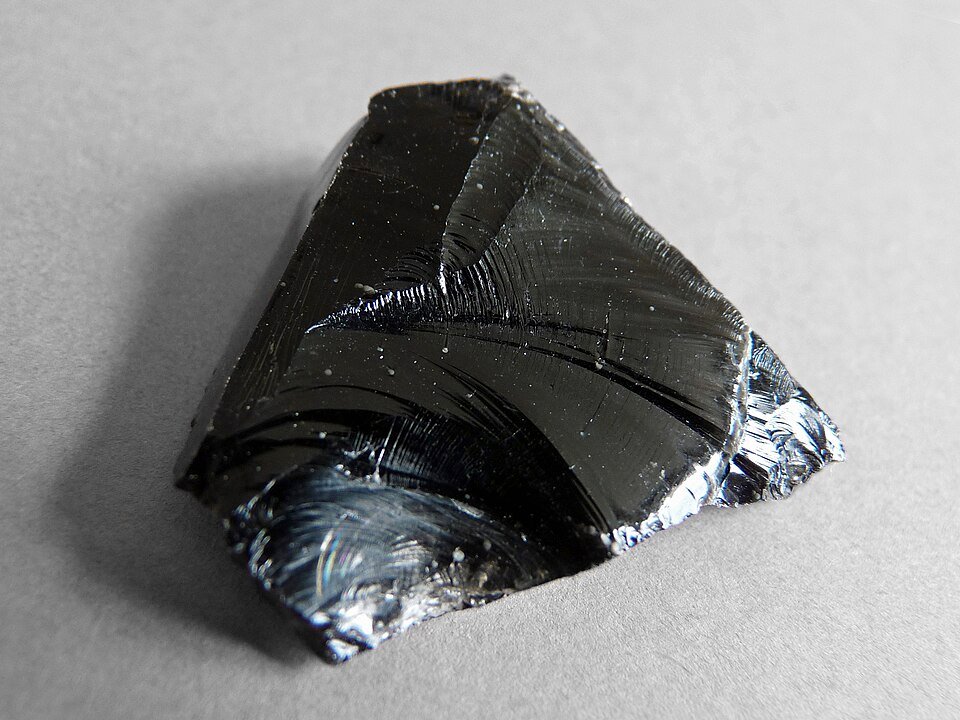
Obsidian
Glassy luster, smooth
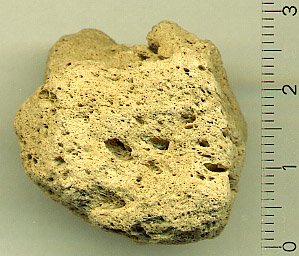
Pumice
Extremely light, full of visible air pockets/holes (vesicles)

Pegmatite
Extremely coarse-grained, individual crystals often large enough to pick out and identify by eye alone
Syenite
Coarse-grained, crystals clearly visible, same general look as granite at a glance
Tuff
Fragmental, often visibly made of compacted ash and small rock/pumice fragments
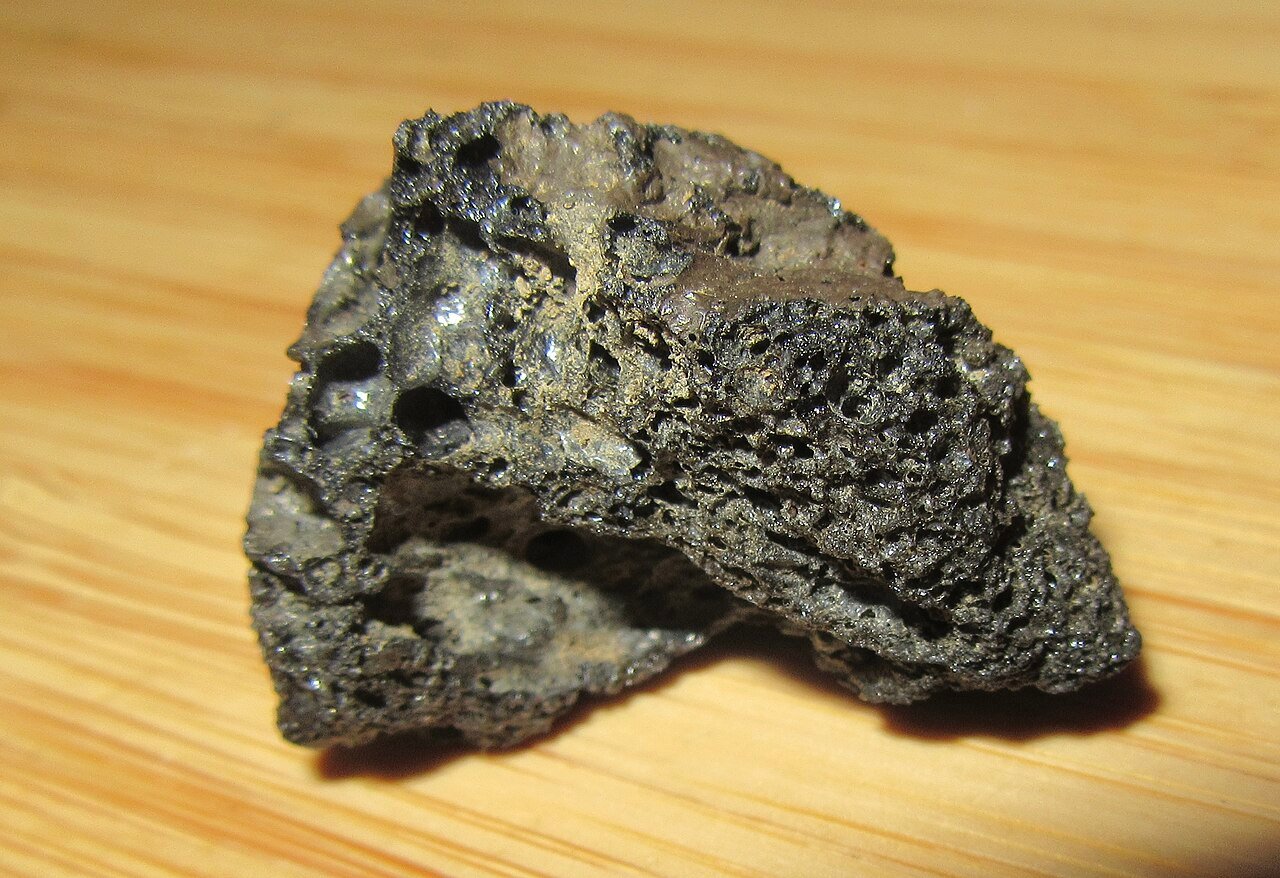
Scoria
Full of visible holes (vesicles), similar to pumice