How does breccia form?
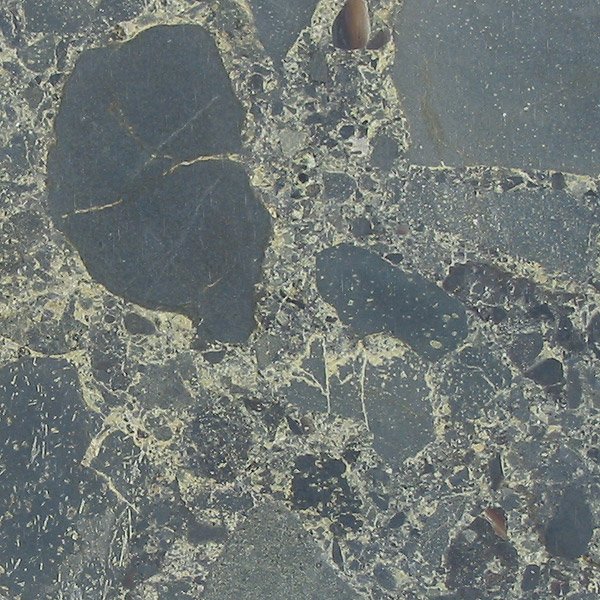
Breccia is a clastic sedimentary rock made of angular rock fragments cemented together — chemically and structurally similar to conglomerate, but distinguished entirely by the shape of its fragments. Angular edges mean the fragments weren't tumbled and worn smooth by long transport (usually by water); they were broken and buried close to their source, sometimes by rockfalls, landslides, or fault movement, rather than carried far by a river.
How can you identify breccia?
Use several clues together.
One photograph shows one specimen, not every variation.
- 01Made of visibly angular (sharp-edged, not rounded) rock fragments set in a finer matrix
- 02Wide range of colors and fragment types, depending on the source rock
- 03Fragments can vary hugely in size within the same specimen
Similar at first glance.
Compare the materials side by side.
Photographs are not shown to the same scale.
Breccia ↗
Made of visibly angular (sharp-edged, not rounded) rock fragments set in a finer matrix
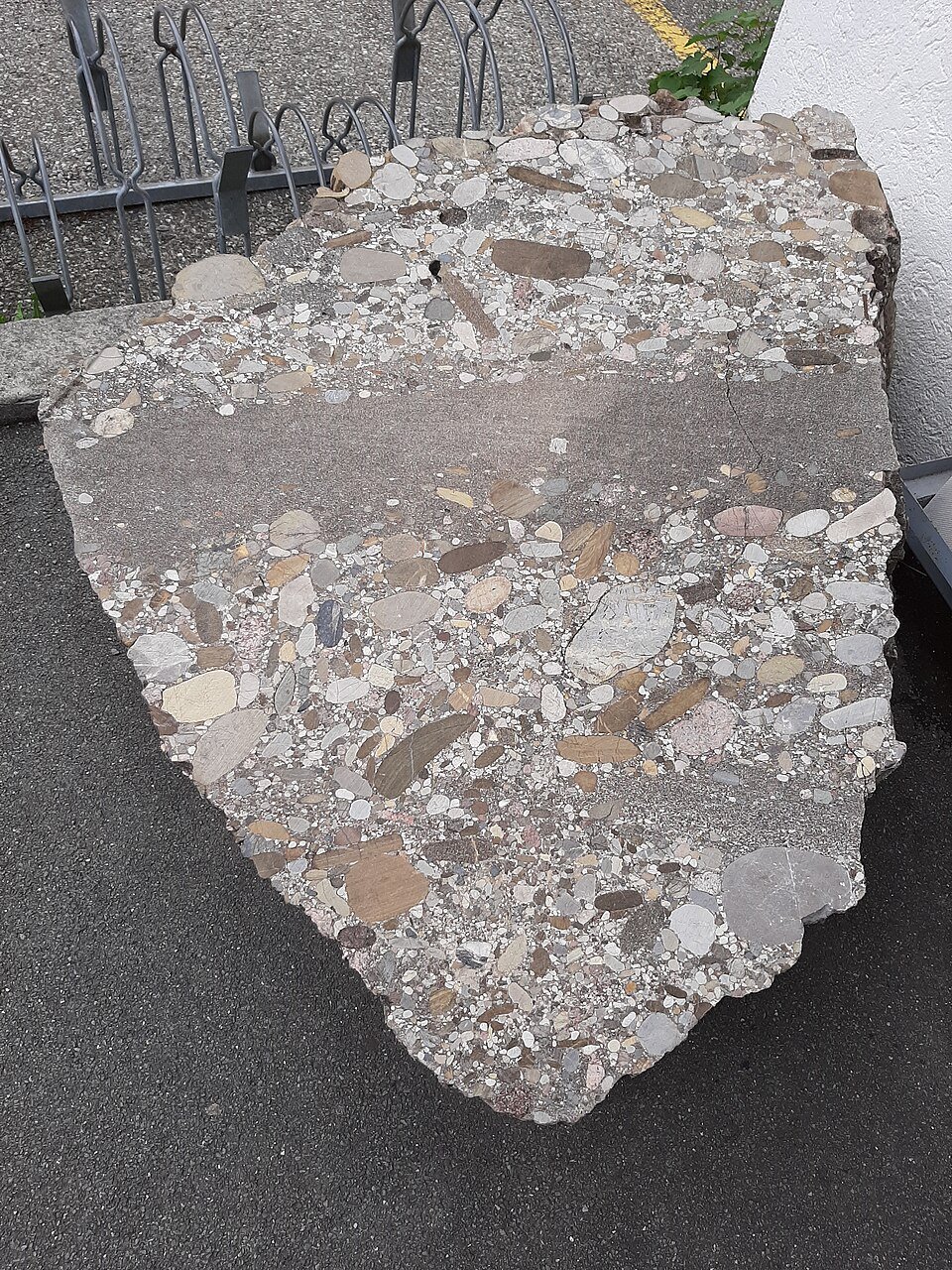
Conglomerate ↗
Visibly made of rounded pebbles/clasts embedded in a finer matrix
Conglomerate — the two are essentially the same rock type with one key difference: breccia's fragments are angular, conglomerate's are rounded. That single trait tells you how far (and how roughly) the material traveled before burial.
Where it’s found.
Near cliff bases, fault zones, and ancient landslide or rockfall deposits — anywhere broken rock was buried quickly, close to its source, without time to be smoothed by transport.