How does conglomerate form?
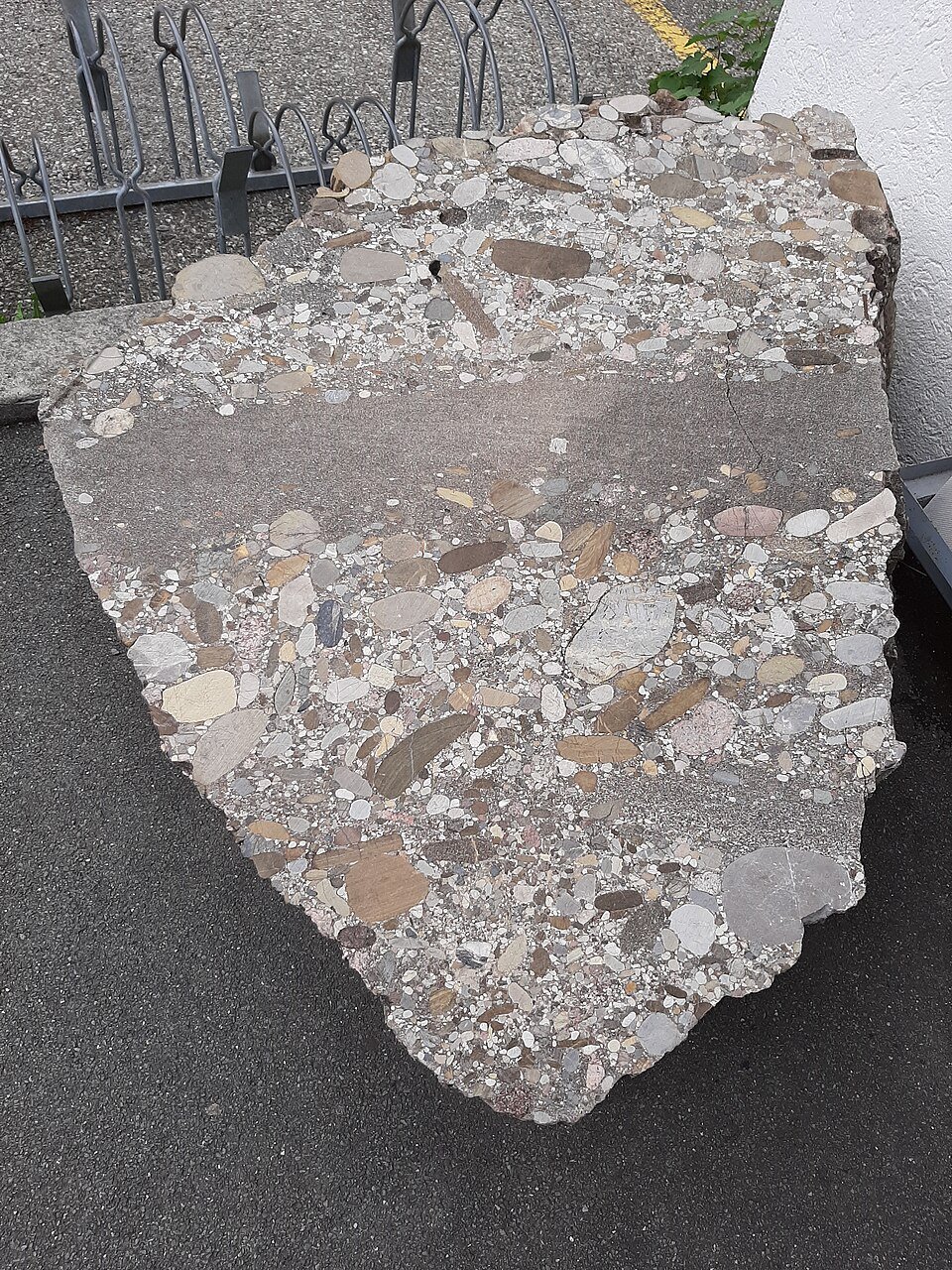
Conglomerate is a clastic sedimentary rock made of large, rounded rock fragments (pebbles and larger) cemented together with finer material filling the gaps — essentially fossilized gravel.
How can you identify conglomerate?
Use several clues together.
One photograph shows one specimen, not every variation.
Similar at first glance.
Compare the materials side by side.
Photographs are not shown to the same scale.
Conglomerate ↗
Visibly made of rounded pebbles/clasts embedded in a finer matrix
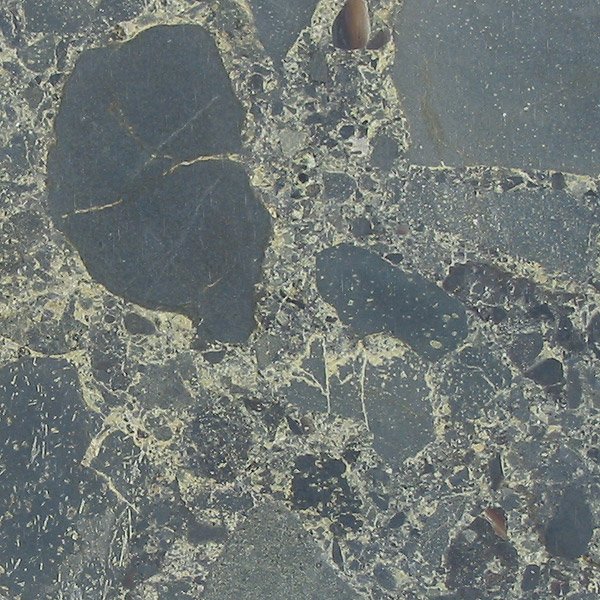
Breccia ↗
Made of visibly angular (sharp-edged, not rounded) rock fragments set in a finer matrix
Breccia — a very similar rock made of angular rather than rounded fragments, meaning the material wasn't transported far (or at all) before burial. Rounded vs. angular fragments is the whole difference.
Where it’s found.
Ancient riverbeds and shorelines, alluvial fans — anywhere coarse material was deposited by fast-moving water.