Igneous / Specimen 04

Gabbro.

How to identify it

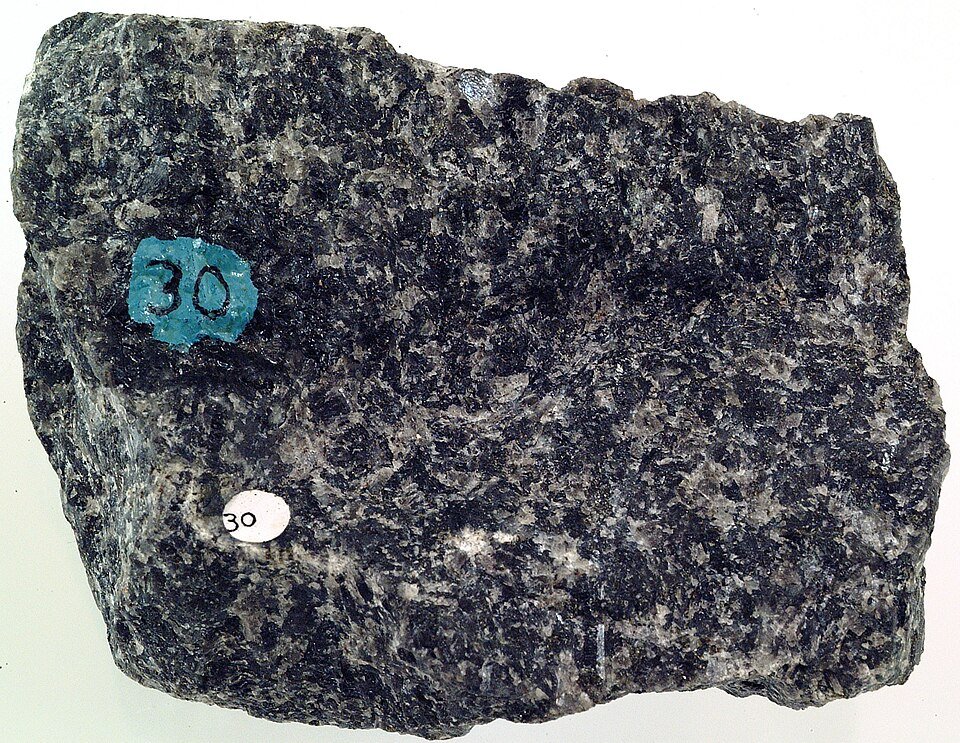
Coarse-grained, like granite or diorite, but dark

Explore the igneous family ↗
Coarse-grained gabbro showing dark minerals and lighter crystal flecks
Darla Sondrol · CC0 · Image source ↗
01 / Origin story

How does gabbro form?

Gabbro is the intrusive (slow-cooling, underground) counterpart to basalt — same dark, iron-and-magnesium-rich composition, but cooled slowly enough deep in the crust to grow large crystals instead of basalt's fine grain.

02 / Read the clues

How can you identify gabbro?

Use several clues together.
One photograph shows one specimen, not every variation.

Enlarged crop of the Gabbro specimen
Texture study · enlarged crop of this specimen
  1. 01Coarse-grained, like granite or diorite, but dark
  2. 02Dark gray to black, sometimes with a slight greenish tint
  3. 03Heavy — dense, iron/magnesium-rich minerals
03 / Commonly confused with

Similar at first glance.

Compare the materials side by side.
Photographs are not shown to the same scale.
Gabbro specimen for comparison

Gabbro ↗

Coarse-grained, like granite or diorite, but dark

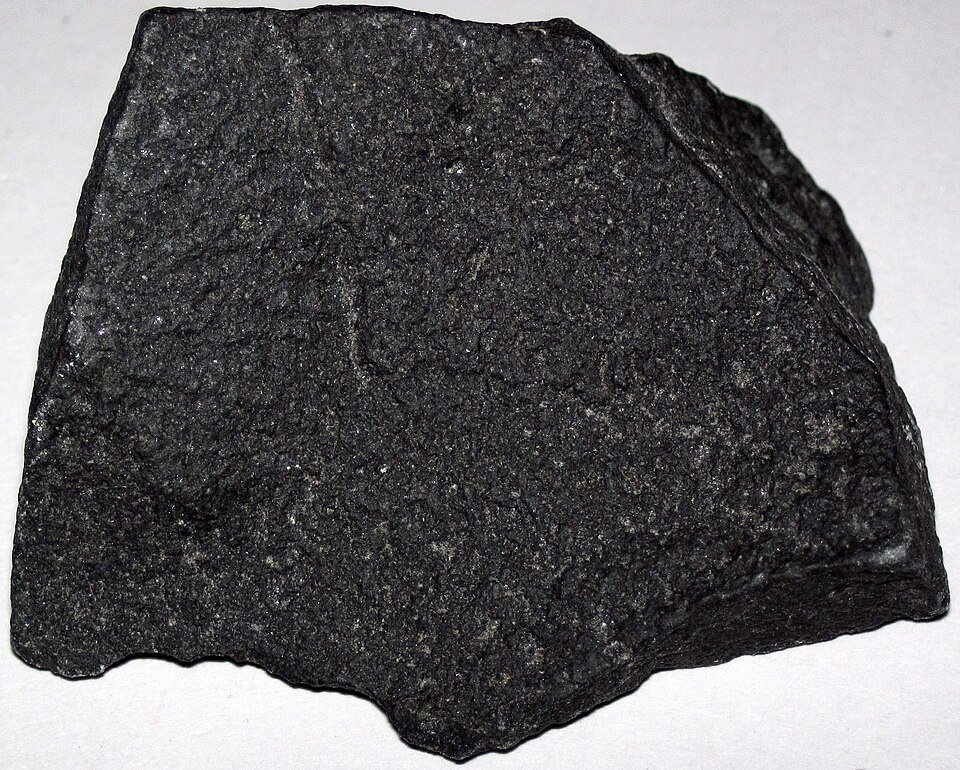
Basalt specimen for comparison

Basalt ↗

Fine-grained — crystals are too small to see individually, often looks almost glassy or dull

Basalt — chemically the same rock, different cooling history. If you can see individual crystals with the naked eye, it's gabbro; if it looks smooth/fine and almost featureless, it's basalt.

04 / Out in the world

Where it’s found.

Deep crustal intrusions, oceanic crust below the basalt layer, and exposed in old, deeply eroded mountain ranges.

Continue exploring

More from this family.