Sedimentary / Specimen 12

Gypsum.

How to identify it

Very soft — can be scratched with a fingernail (2 on the Mohs hardness scale, one of the softest common rock-forming minerals)
Explore the sedimentary family ↗
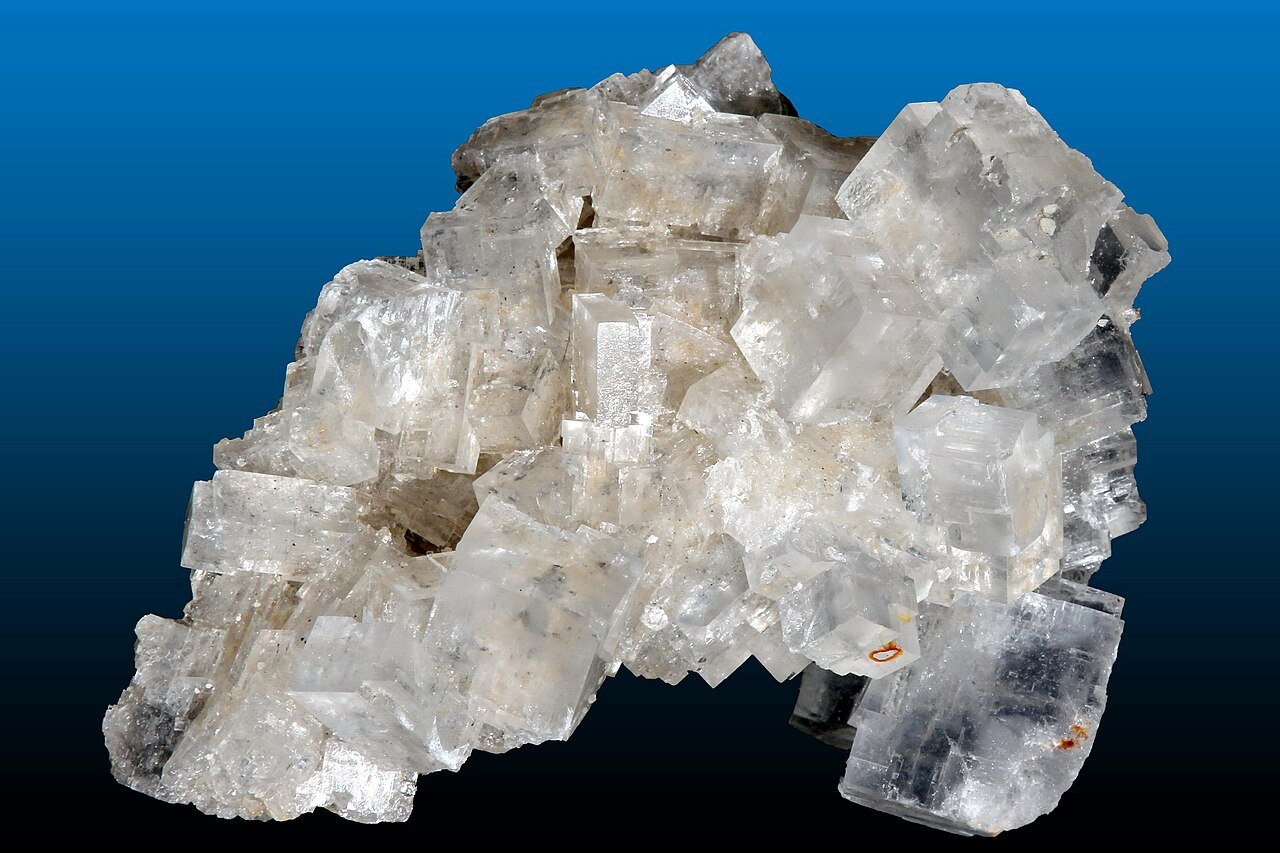
Gypsum rock specimen
Robert M. Lavinsky, iRocks.com · CC BY-SA 3.0 · Image source ↗
01 / Origin story

How does gypsum form?

Gypsum rock is an evaporite, forming the same basic way as rock salt: a body of water rich in dissolved calcium sulfate evaporates, leaving the mineral behind to crystallize into solid rock.

02 / Read the clues

How can you identify gypsum?

Use several clues together.
One photograph shows one specimen, not every variation.

Enlarged crop of the Gypsum specimen
Texture study · enlarged crop of this specimen
  1. 01Very soft — can be scratched with a fingernail (2 on the Mohs hardness scale, one of the softest common rock-forming minerals)
  2. 02Usually white, gray, or clear
  3. 03Often shows a distinctive silky or pearly luster
03 / Commonly confused with

Similar at first glance.

Compare the materials side by side.
Photographs are not shown to the same scale.

Gypsum specimen for comparison

Gypsum ↗

Very soft — can be scratched with a fingernail (2 on the Mohs hardness scale, one of the softest common rock-forming minerals)

Rock Salt (halite) specimen for comparison

Rock Salt (halite) ↗

Usually clear, white, or tinted pink/orange from impurities

Rock salt — both are soft evaporites, but gypsum doesn't taste salty and doesn't dissolve in water nearly as readily.

04 / Out in the world

Where it’s found.

Ancient evaporated sea and lake basins worldwide — mined extensively as the primary raw material for drywall and plaster.

Continue exploring
More from this family.