Igneous / Specimen 08

Obsidian.

How to identify it

Glassy luster, smooth

Explore the igneous family ↗
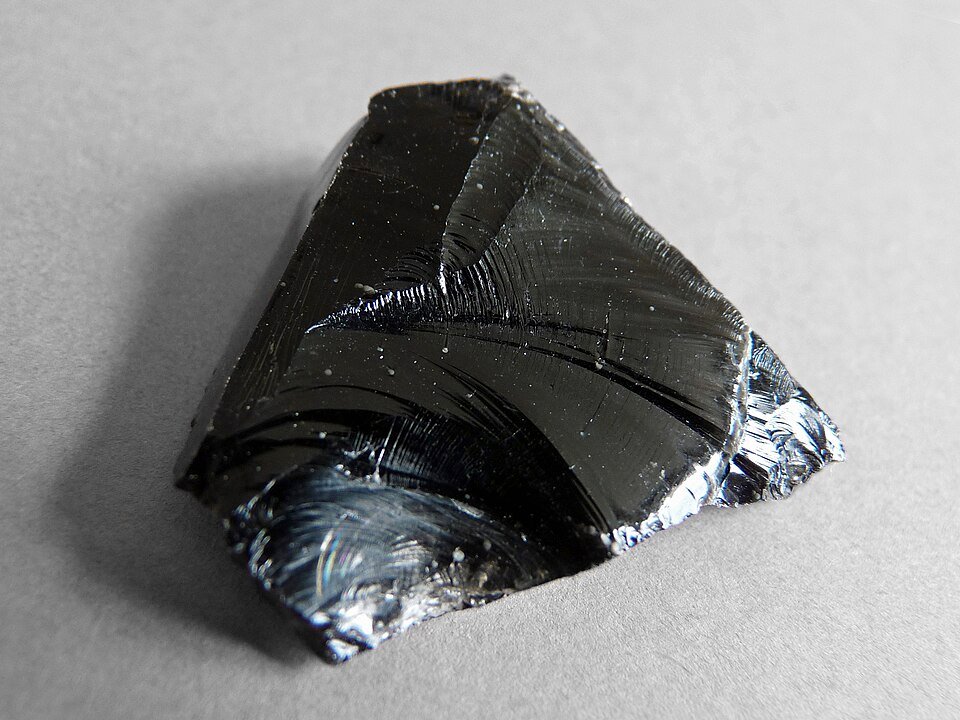
Black obsidian specimen with reflective glassy surfaces and curved fractures
Ji-Elle It feels nice and warm It feels like a love storm · CC BY-SA 3.0 · Image source ↗
01 / Origin story

How does obsidian form?

Obsidian is volcanic glass — lava that cooled so fast it had no time to crystallize into minerals at all. It's technically not even made of crystals, just a solid, undifferentiated glass.

02 / Read the clues

How can you identify obsidian?

Use several clues together.
One photograph shows one specimen, not every variation.

Enlarged crop of the Obsidian specimen
Texture study · enlarged crop of this specimen
  1. 01Glassy luster, smooth
  2. 02Almost always black (sometimes dark brown or with a greenish tint); occasionally banded
  3. 03Breaks with a curved, sharp-edged fracture (conchoidal fracture) — this is why it was prized historically for cutting tools and arrowheads
03 / Commonly confused with

Similar at first glance.

Compare the materials side by side.
Photographs are not shown to the same scale.

Obsidian specimen for comparison

Obsidian ↗

Glassy luster, smooth

Basalt specimen for comparison

Basalt ↗

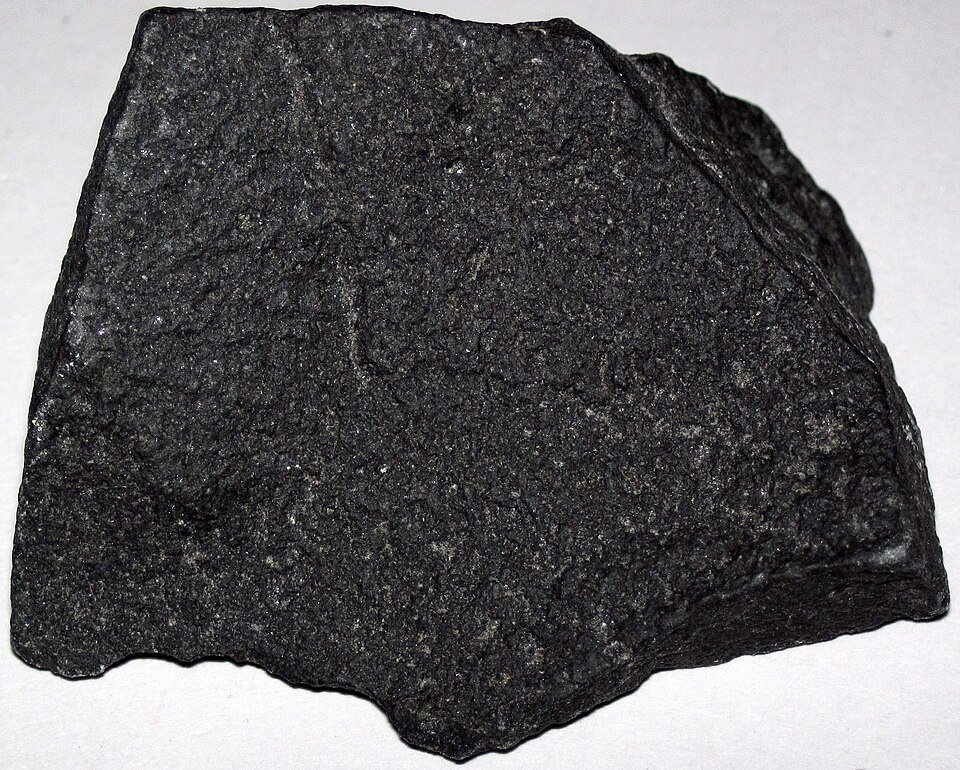
Fine-grained — crystals are too small to see individually, often looks almost glassy or dull

Basalt, at a glance — but obsidian's glassy shine and razor-sharp fracture edges are unmistakable once you've handled a piece; basalt is dull and doesn't fracture the same way.

04 / Out in the world

Where it’s found.

Rapidly cooled lava flows, especially rhyolitic eruptions — Yellowstone, Newberry Volcano in Oregon, and many other volcanic regions.

Continue exploring

More from this family.