01 / Origin story
How does pegmatite form?
Pegmatite is an intrusive igneous rock, chemically similar to granite, but formed from the last, water-rich residual magma left over after a granite body has mostly crystallized. That trapped water lets remaining ions move freely and crystallize into exceptionally large mineral grains — sometimes inches or even feet across — far larger than granite's already-coarse crystals.
02 / Read the clues
How can you identify pegmatite?
Use several clues together.
One photograph shows one specimen, not every variation.
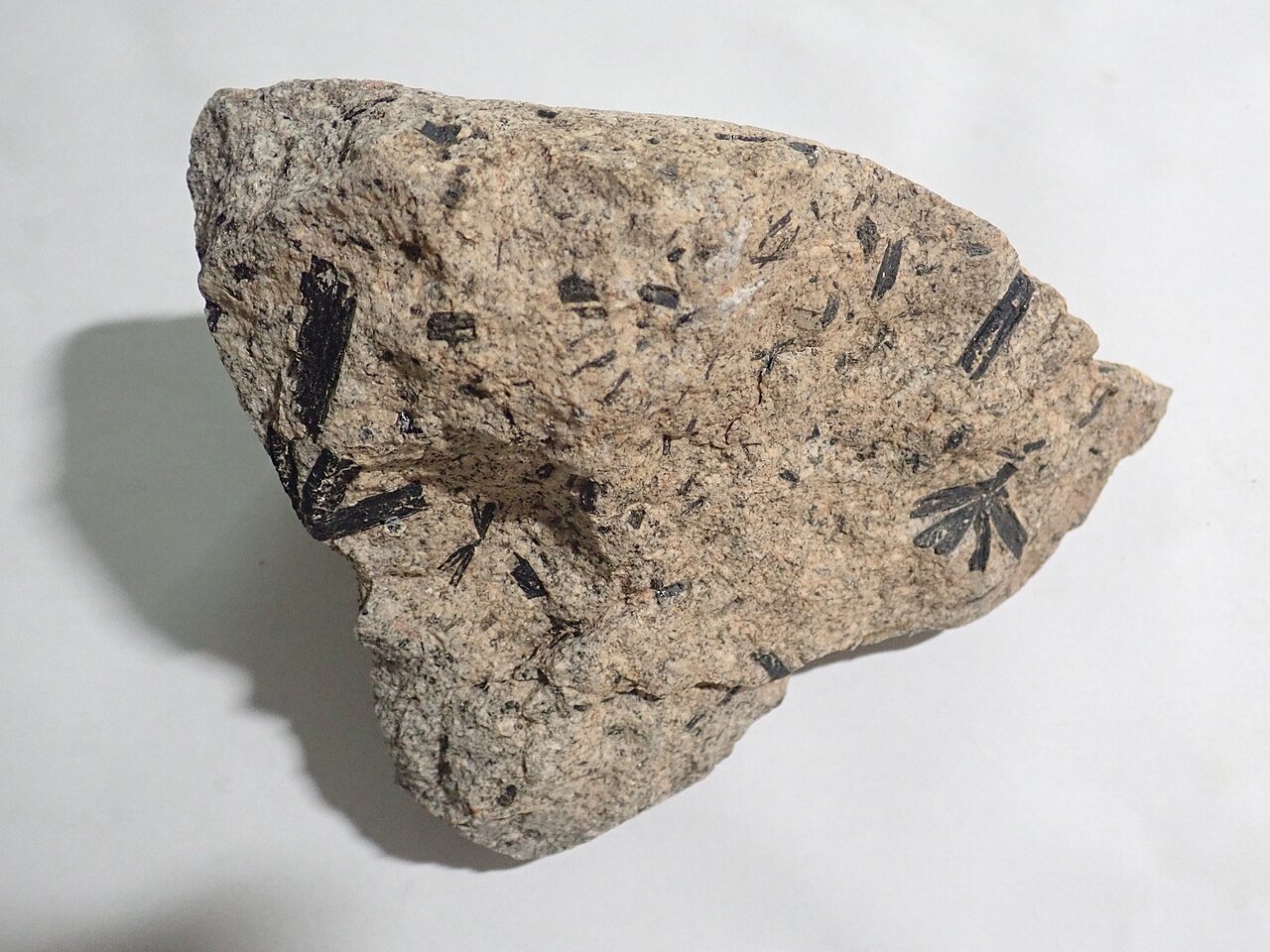
- 01Extremely coarse-grained, individual crystals often large enough to pick out and identify by eye alone
- 02Same basic mineral makeup as granite (quartz, feldspar, mica), just dramatically larger crystals
- 03Often contains rarer minerals not typically found in granite, including gem-quality crystals (tourmaline, beryl, topaz)
03 / Commonly confused with
Similar at first glance.
Compare the materials side by side.
Photographs are not shown to the same scale.
Pegmatite ↗
Extremely coarse-grained, individual crystals often large enough to pick out and identify by eye alone
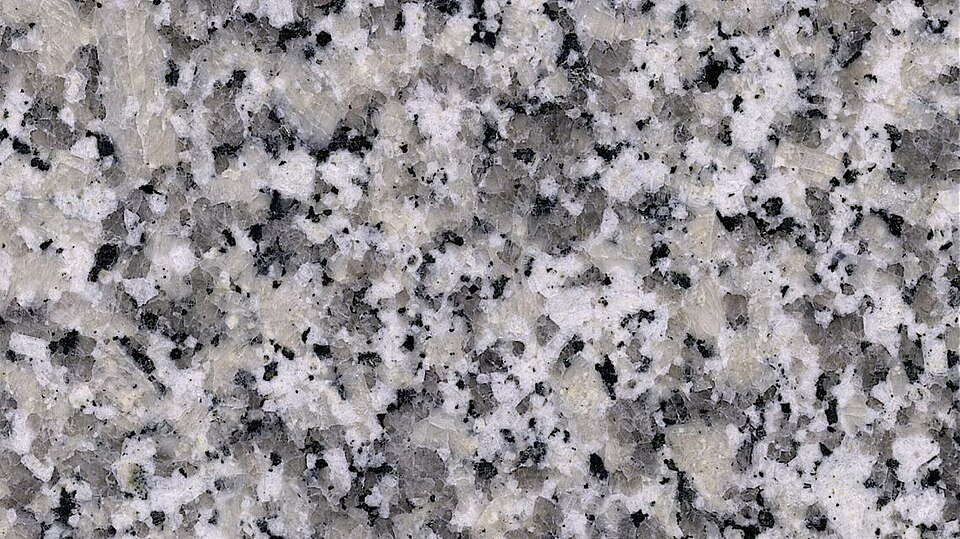
Granite ↗
Coarse-grained — individual mineral crystals are visible to the naked eye
04 / Out in the world
Where it’s found.
Continue exploring