
How does serpentinite form?
Serpentinite is a metamorphic rock formed when peridotite — mantle rock, as described on the Peridotite page — is altered by hot water at relatively low temperature, a process called serpentinization, which transforms peridotite's olivine and pyroxene into serpentine-group minerals. This commonly happens where mantle rock is exposed to circulating water, notably in ophiolites (see the Peridotite page's ophiolite mention).
How can you identify serpentinite?
Use several clues together.
One photograph shows one specimen, not every variation.
- 01Green to greenish-black, sometimes mottled or streaked
- 02Smooth, waxy to slightly greasy-feeling luster — genuinely feels almost soapy to the touch
- 03Relatively soft, and often shows a fibrous or splintery texture
Similar at first glance.
Compare the materials side by side.
Photographs are not shown to the same scale.
Serpentinite ↗
Green to greenish-black, sometimes mottled or streaked
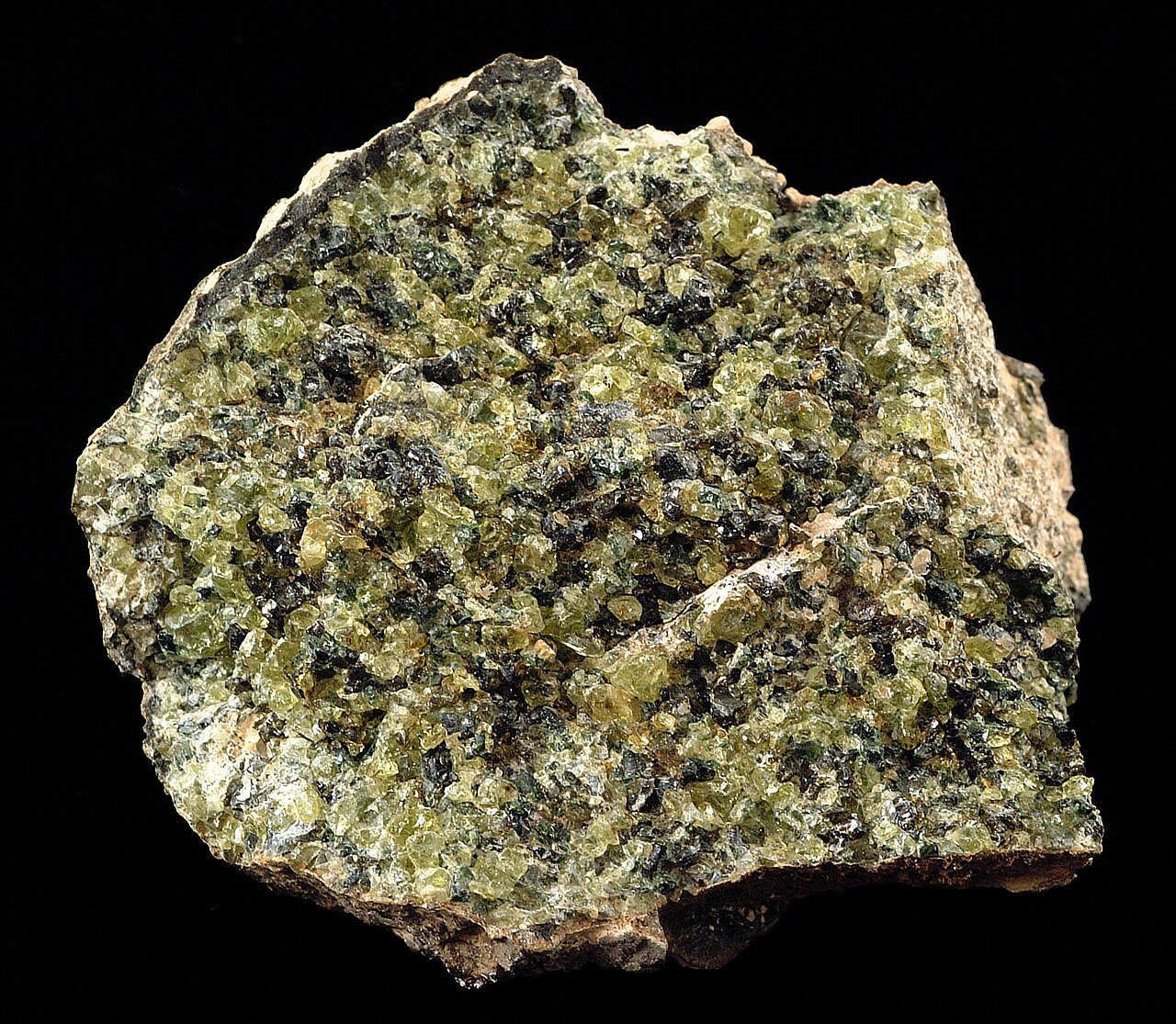
Peridotite ↗
Coarse-grained
Peridotite, its parent rock — peridotite is a coarse, granular olivine-rich igneous rock; serpentinite is smoother, softer, and more uniformly green from the alteration process, with the original coarse igneous texture largely erased.
Where it’s found.
Ophiolites and other exposed mantle-rock zones worldwide — California's state rock is serpentinite, reflecting the state's significant ophiolite exposures.
More from this family.
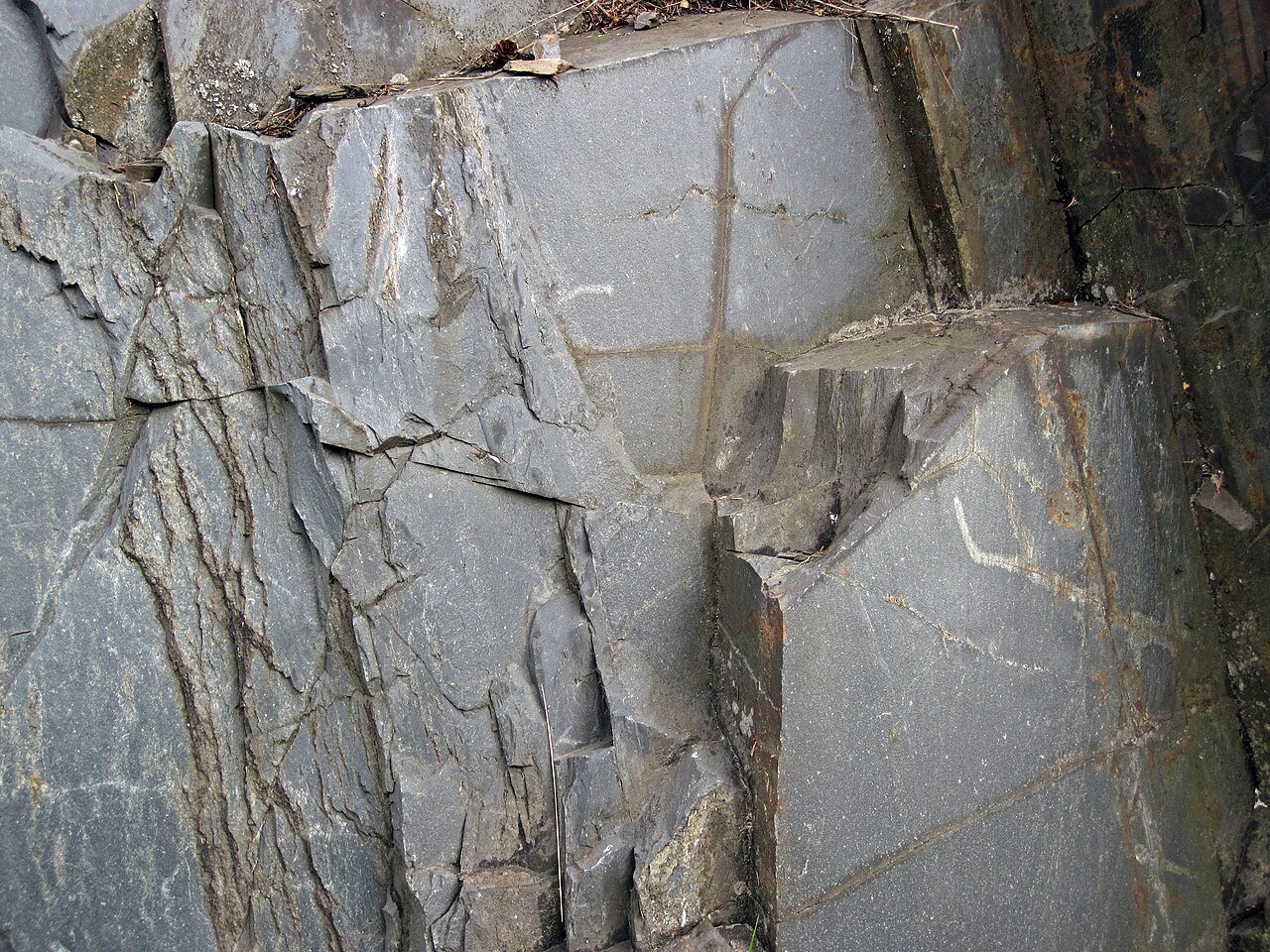
Slate
Splits into thin, flat, smooth sheets — even more cleanly than the shale it came from
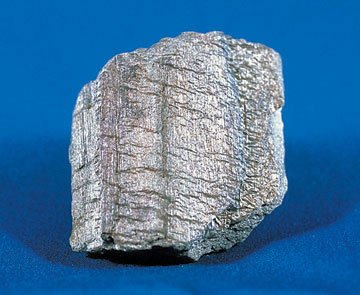
Phyllite
Distinctive silky/satiny sheen (from the small aligned mica crystals) — this is the fastest way to identify it
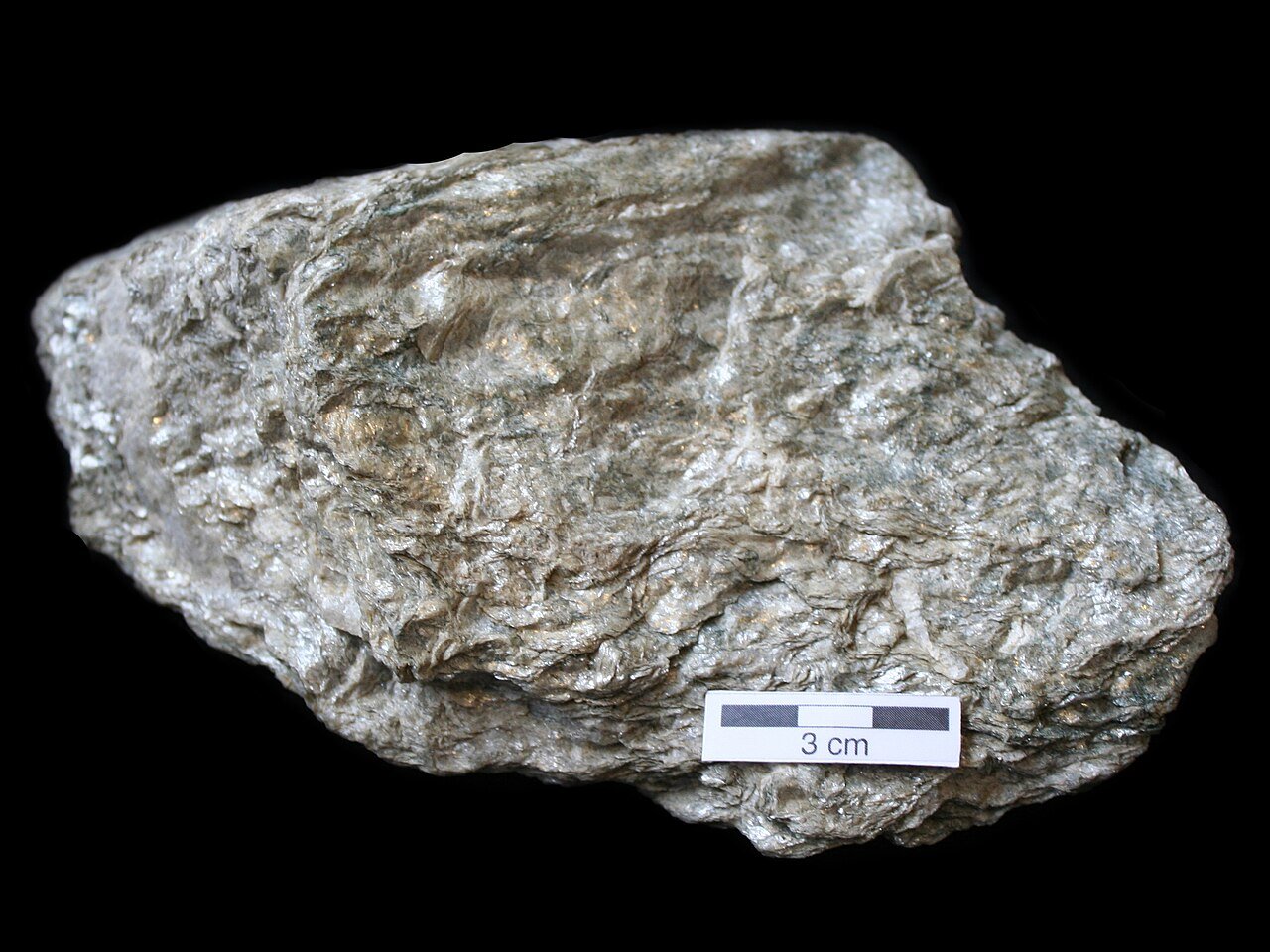
Schist
Visible, large, sparkly mica flakes (or other platy minerals) aligned in wavy layers