Igneous / Specimen 07

Andesite.

How to identify it

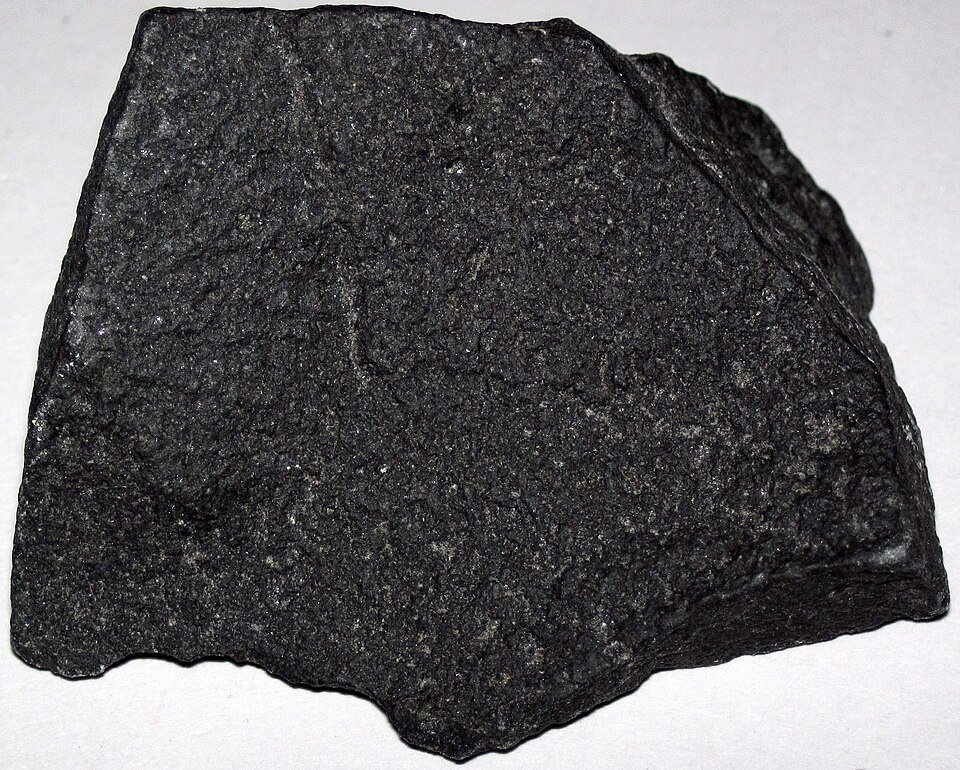
Fine-grained, medium gray to greenish-gray
Explore the igneous family ↗
Andesite showing pale crystals scattered through a dark fine-grained groundmass
Photographer: Siim Sepp, 2005 · CC BY-SA 3.0 · Image source ↗
01 / Origin story

How does andesite form?

Andesite is extrusive, chemically intermediate between basalt and rhyolite — common in volcanoes formed at subduction zones, where oceanic crust melts as it's pushed under a continental plate.

02 / Read the clues

How can you identify andesite?

Use several clues together.
One photograph shows one specimen, not every variation.

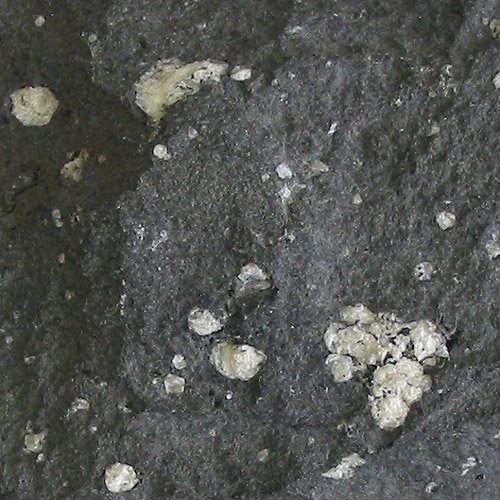
Enlarged crop of the Andesite specimen
Texture study · enlarged crop of this specimen
  1. 01Fine-grained, medium gray to greenish-gray
  2. 02Often has small visible crystals of feldspar scattered in the fine groundmass
  3. 03Named for the Andes, where it's extremely common
03 / Commonly confused with

Similar at first glance.

Compare the materials side by side.
Photographs are not shown to the same scale.

Andesite specimen for comparison

Andesite ↗

Fine-grained, medium gray to greenish-gray

Basalt specimen for comparison

Basalt ↗

Fine-grained — crystals are too small to see individually, often looks almost glassy or dull

Basaltandesite tends to be lighter gray rather than basalt's near-black, and slightly less dense, but the two can genuinely be hard to tell apart by eye alone without a closer mineral analysis.

04 / Out in the world

Where it’s found.

Classic stratovolcano regions — the Andes, the Cascades (Mount St. Helens, Rainier), the Pacific "Ring of Fire" generally.

Continue exploring
More from this family.