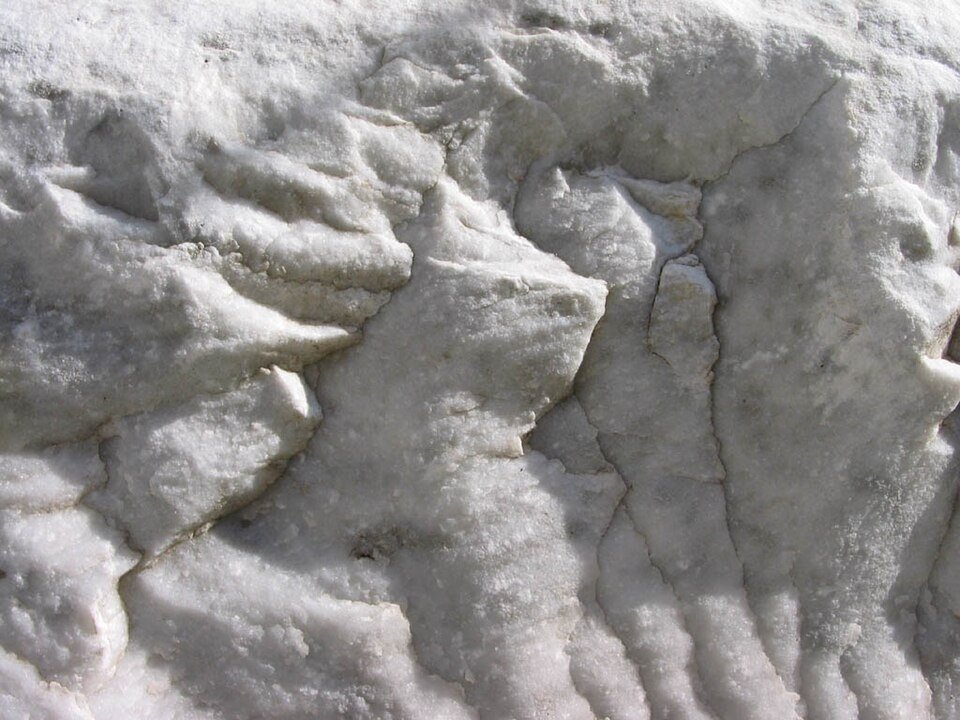
How does marble form?
Marble is a non-foliated metamorphic rock formed when limestone (or chalk) is subjected to heat and pressure, causing its calcite crystals to recrystallize into a denser, interlocking crystalline structure.
How can you identify marble?
Use several clues together.
One photograph shows one specimen, not every variation.
- 01Crystalline, sugary-looking texture when broken
- 02Often shows swirling color patterns/veining from mineral impurities
- 03Still reacts with acid, just like its parent limestone (same mineral, calcite)
- 04Softer than most metamorphic rock — around 3 on the Mohs scale
- 05Prized for carving and construction — statues, buildings, countertops
Similar at first glance.
Compare the materials side by side.
Photographs are not shown to the same scale.
Marble ↗
Crystalline, sugary-looking texture when broken
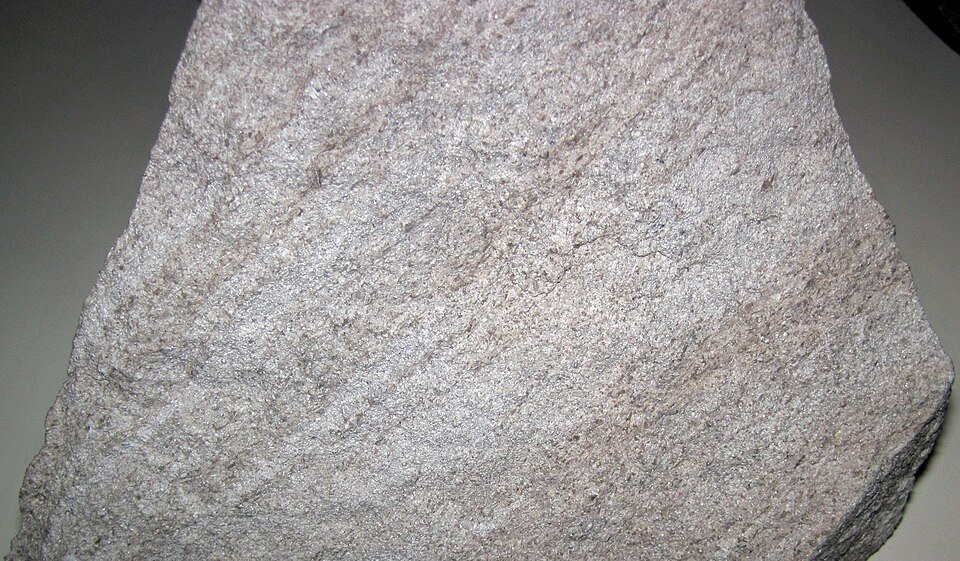
Limestone ↗
Usually light-colored: white, gray, tan, sometimes yellowish
Where it’s found.
Regions of metamorphosed limestone — famously Carrara, Italy, and various deposits across the U.S. (Vermont, Georgia, Colorado).
More from this family.
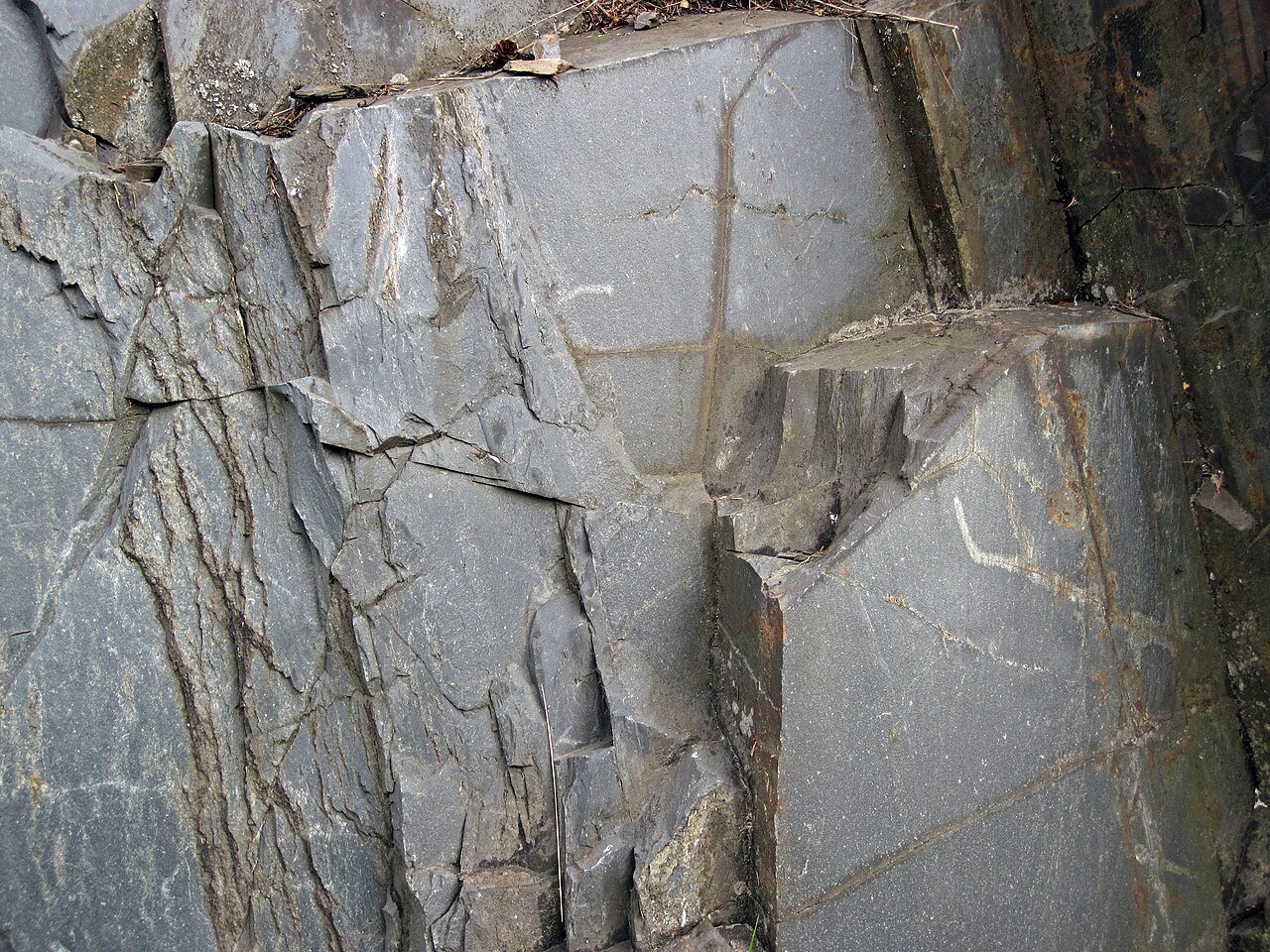
Slate
Splits into thin, flat, smooth sheets — even more cleanly than the shale it came from
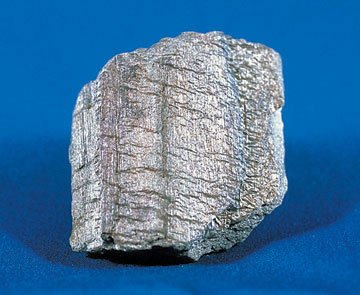
Phyllite
Distinctive silky/satiny sheen (from the small aligned mica crystals) — this is the fastest way to identify it
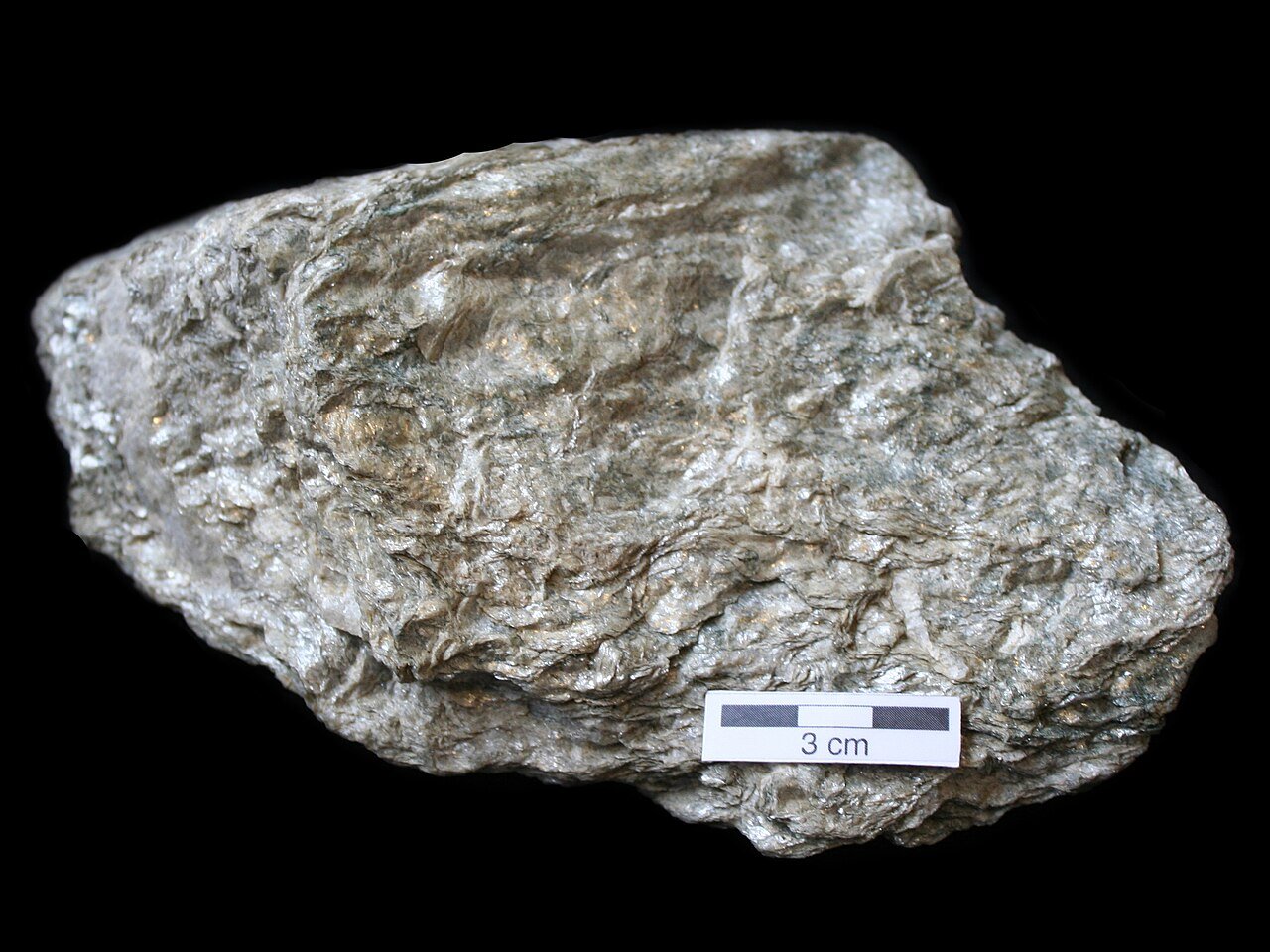
Schist
Visible, large, sparkly mica flakes (or other platy minerals) aligned in wavy layers