How does limestone form?
Limestone is a chemical/biochemical sedimentary rock, made mostly of calcium carbonate — often built from the accumulated shells and skeletons of marine organisms (corals, shellfish, microscopic plankton) over vast stretches of time in shallow ocean environments.
How can you identify limestone?
Use several clues together.
One photograph shows one specimen, not every variation.
- 01Usually light-colored: white, gray, tan, sometimes yellowish
- 02Often contains visible fossils or fossil fragments (shells, coral)
- 03Reacts with acid — a drop of vinegar or dilute hydrochloric acid will fizz on limestone; this is one of the most reliable field identification tests in all of geology
- 04Relatively soft — around 3 on the Mohs hardness scale
Similar at first glance.
Compare the materials side by side.
Photographs are not shown to the same scale.
Limestone ↗
Usually light-colored: white, gray, tan, sometimes yellowish
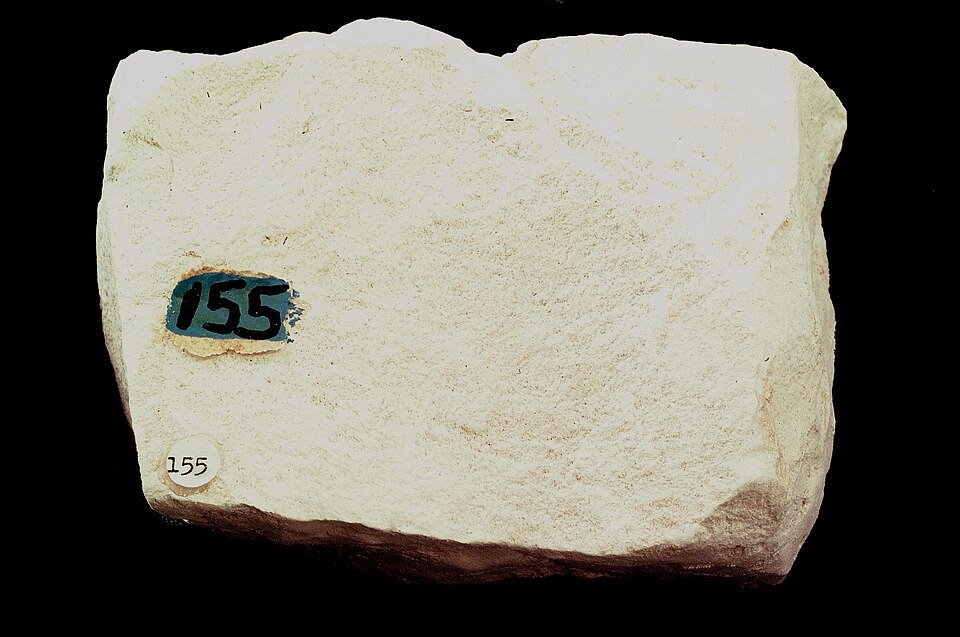
Chalk ↗
Very soft, fine, powdery — easily scratched with a fingernail
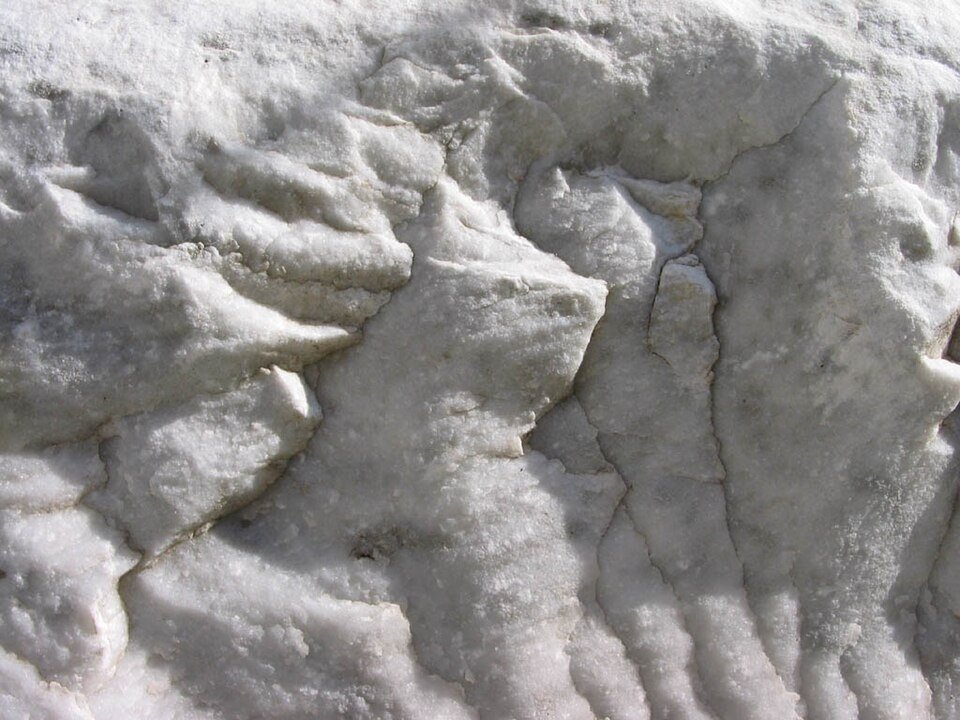
Marble ↗
Crystalline, sugary-looking texture when broken
Where it’s found.
Extremely widespread — ancient shallow sea beds now on land worldwide; the White Cliffs of Dover, Florida's bedrock, much of the karst landscape in Kentucky/Indiana with its caves.