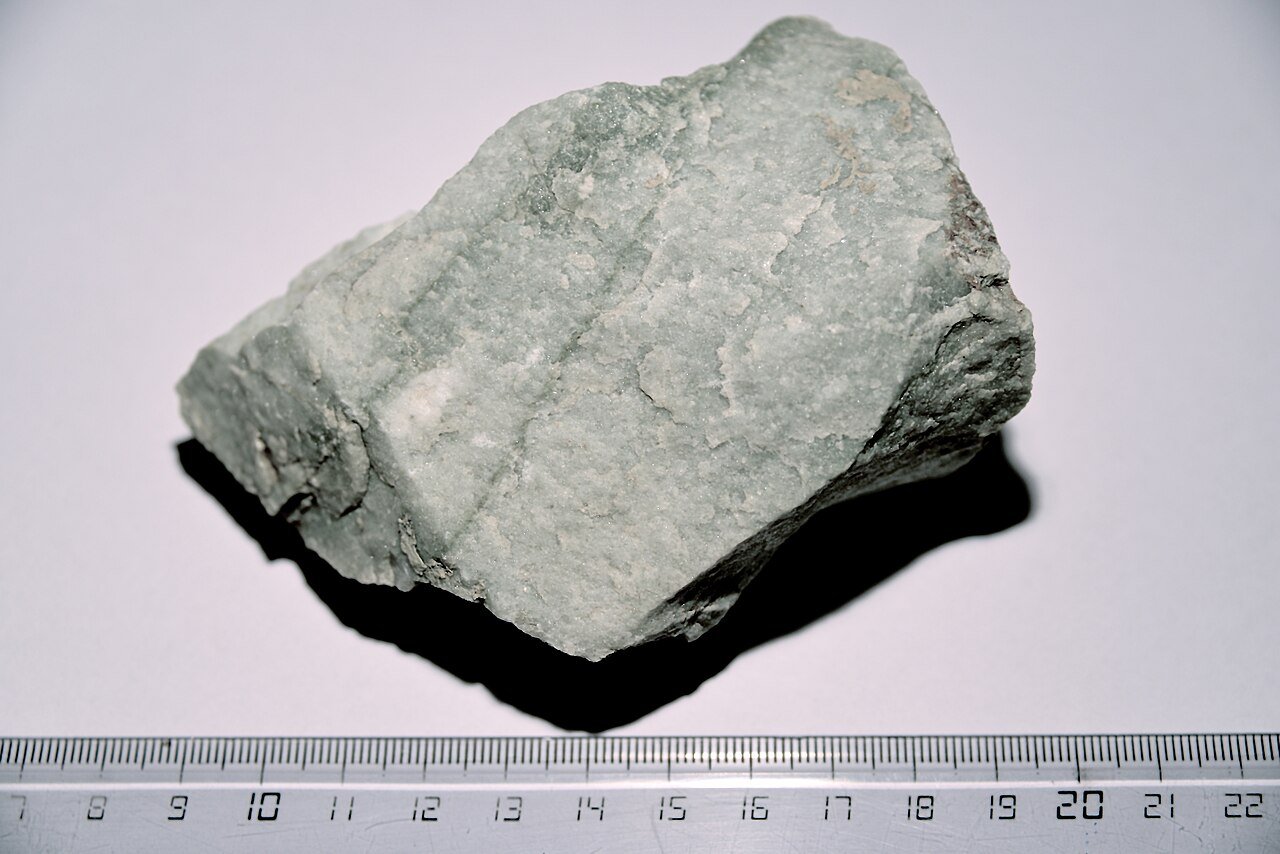
How does quartzite form?
Quartzite is a non-foliated metamorphic rock formed when sandstone is subjected to heat and pressure, fusing the individual quartz sand grains into one continuous, interlocking crystal structure.
How can you identify quartzite?
Use several clues together.
One photograph shows one specimen, not every variation.
- 01Very hard (7, like quartz) — resists scratching
- 02Sugary, crystalline texture similar to marble, but far harder
- 03Usually white, gray, or pink, sometimes reddish
- 04Breaks through grains rather than around them, unlike sandstone (a good field test: the fracture surface looks glassy/crystalline, not grainy)
Similar at first glance.
Compare the materials side by side.
Photographs are not shown to the same scale.
Quartzite ↗
Very hard (7, like quartz) — resists scratching
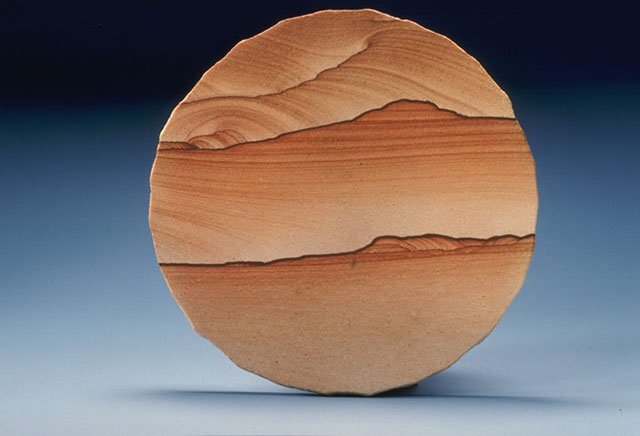
Sandstone ↗
Visibly grainy texture, feels gritty
Sandstone, its parent rock — the key difference is that a piece of quartzite breaking apart fractures straight through the individual sand grains (since they're fully fused), while sandstone breaks around the grains, leaving a rougher, more granular surface.
Where it’s found.
More from this family.
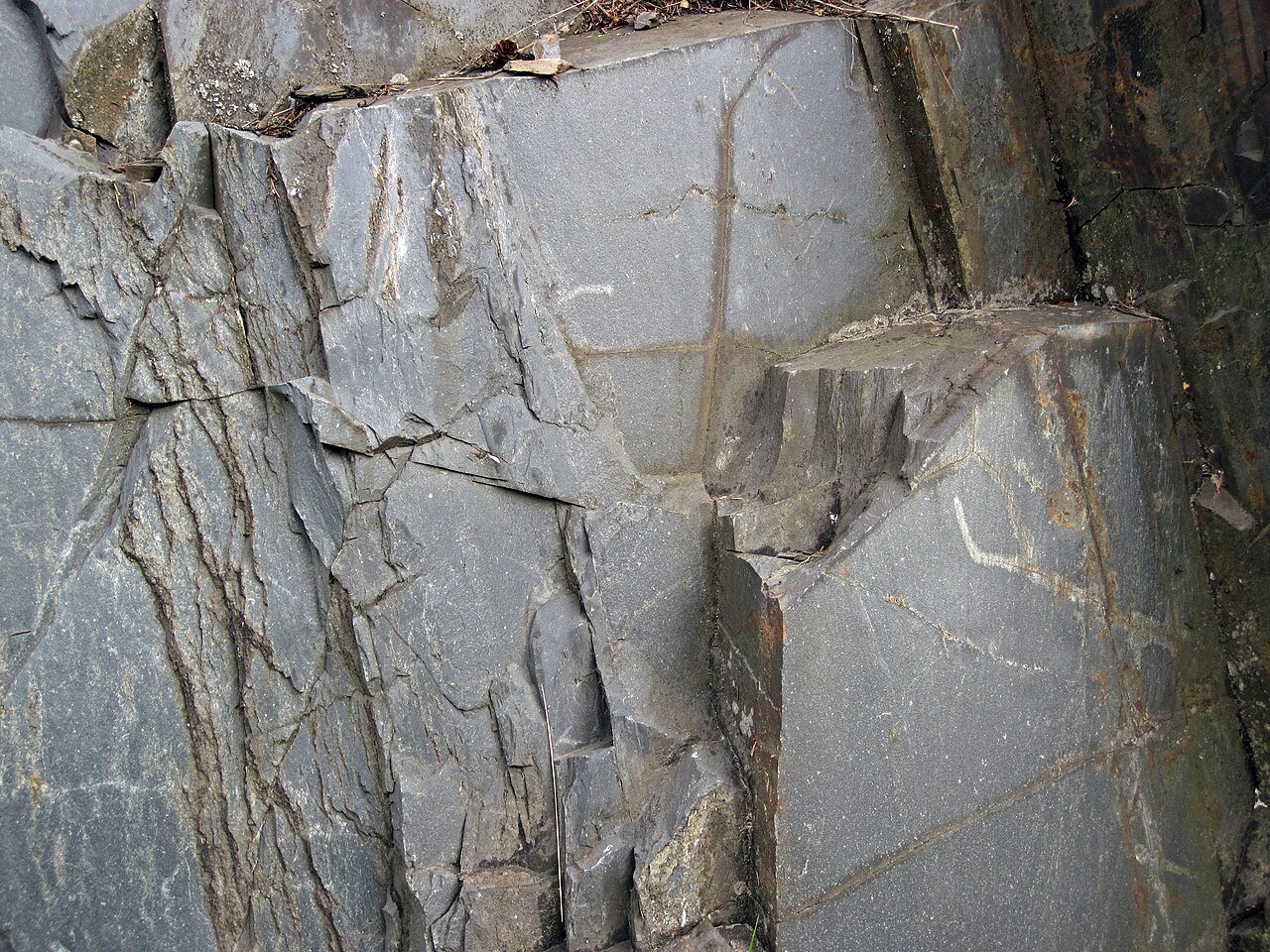
Slate
Splits into thin, flat, smooth sheets — even more cleanly than the shale it came from
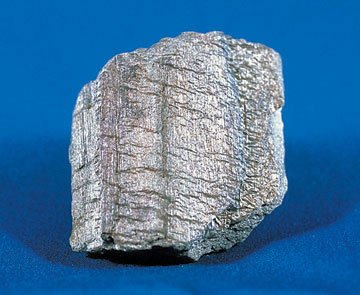
Phyllite
Distinctive silky/satiny sheen (from the small aligned mica crystals) — this is the fastest way to identify it
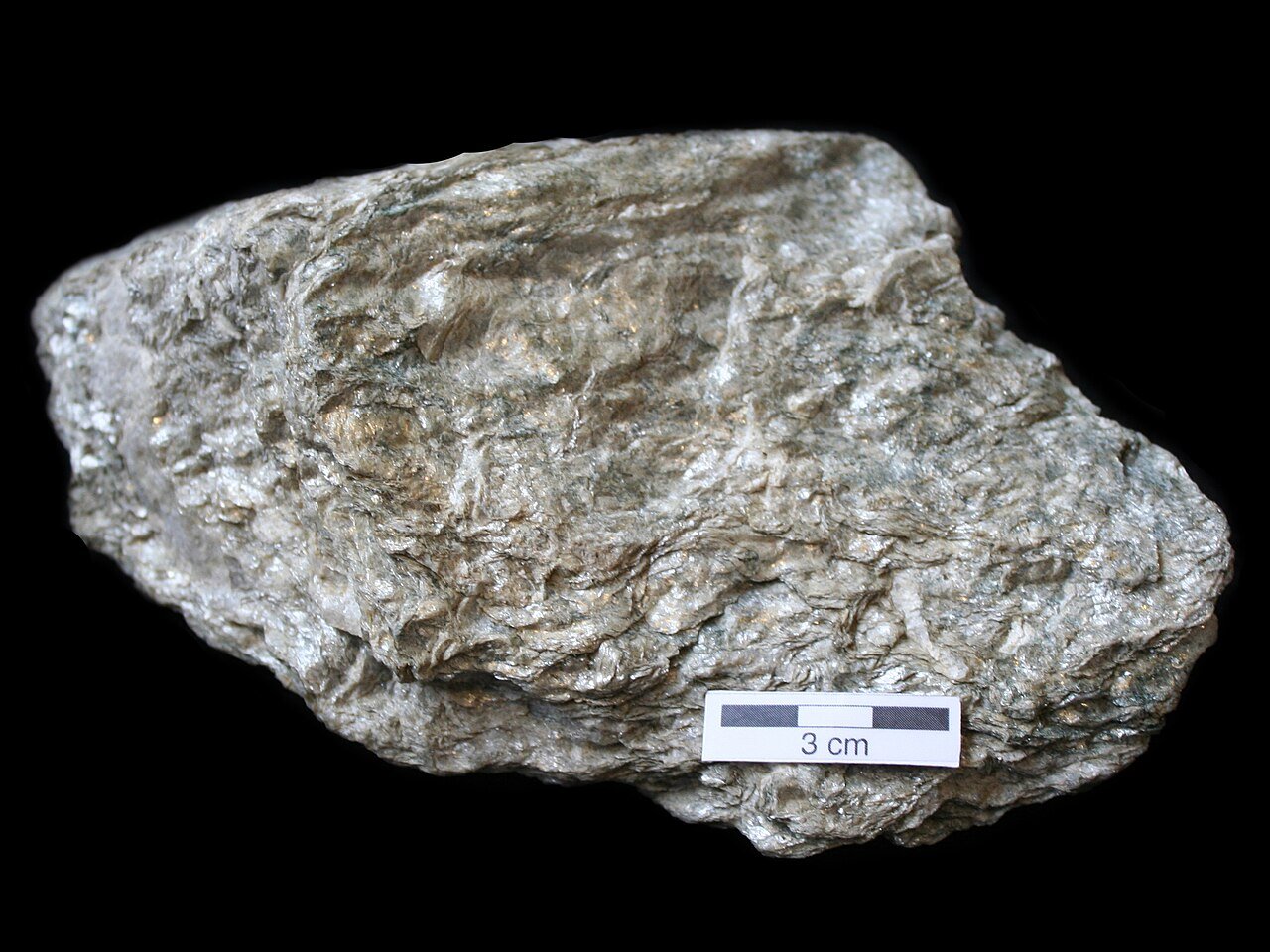
Schist
Visible, large, sparkly mica flakes (or other platy minerals) aligned in wavy layers