01 / Origin story
How does scoria form?
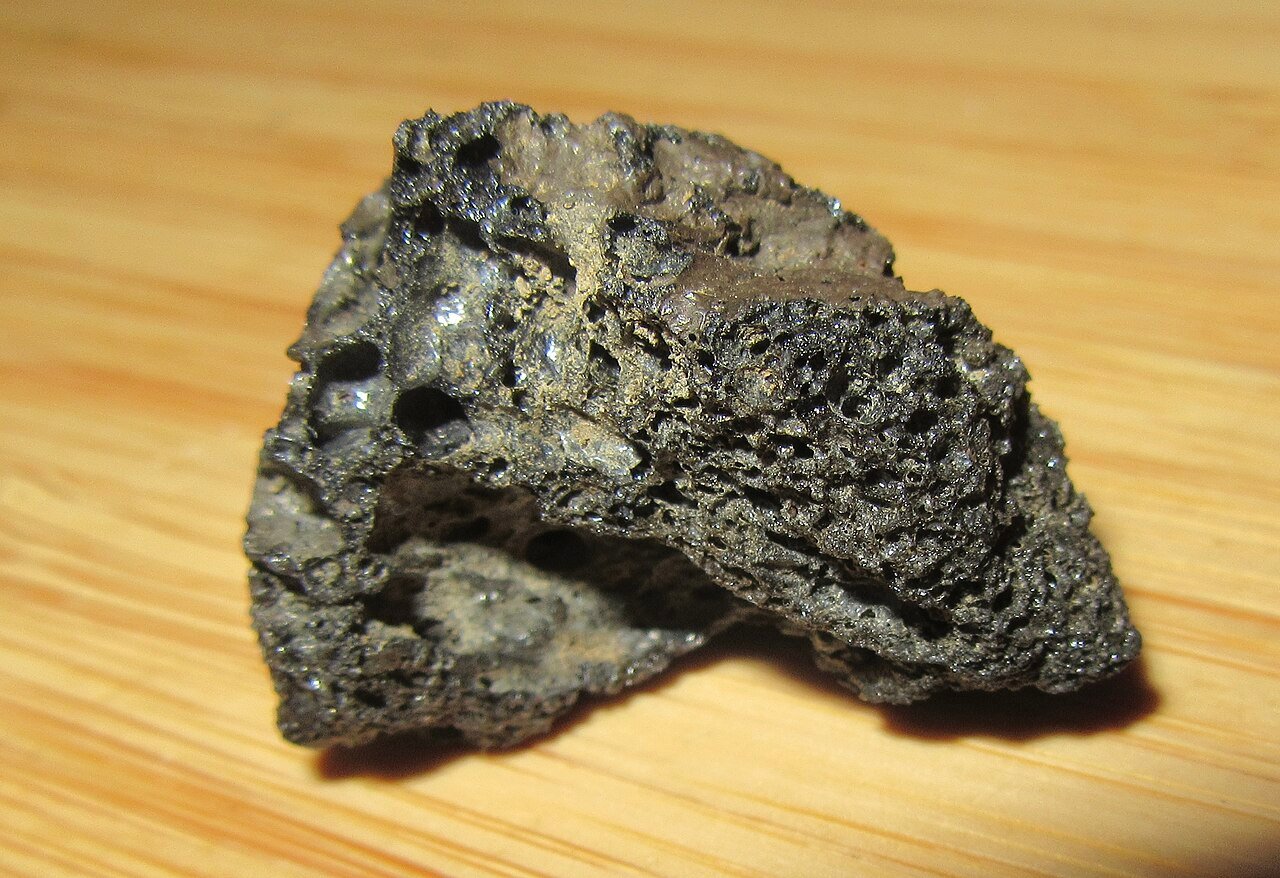
Scoria is an extrusive igneous rock, chemically similar to basalt, formed when gas-rich mafic lava erupts and cools quickly enough to trap escaping gas bubbles throughout the rock — the same basic vesicle-trapping process as pumice, just with denser, darker, iron-and-magnesium-rich magma instead of pumice's light-colored, silica-rich magma.
02 / Read the clues
How can you identify scoria?
Use several clues together.
One photograph shows one specimen, not every variation.
03 / Commonly confused with
A distinctive combination.
04 / Out in the world
Where it’s found.
Common around basaltic volcanic vents and cinder cones worldwide — often the actual material a cinder cone volcano is built from.
Continue exploring