How does chert form?
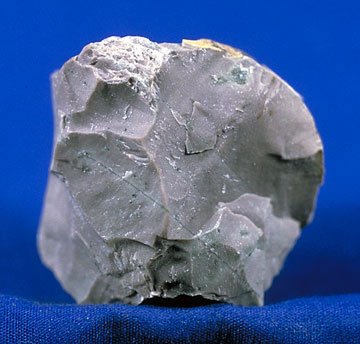
Chert is a chemical sedimentary rock made of very fine-grained silica (the same chemical as quartz), forming either from silica-rich groundwater precipitating within existing rock, or from the accumulated microscopic silica skeletons of marine organisms.
How can you identify chert?
Use several clues together.
One photograph shows one specimen, not every variation.
- 01Very hard (7 on the Mohs scale, like quartz) — will scratch glass
- 02Fine-grained, waxy to dull luster
- 03Breaks with the same curved conchoidal fracture as obsidian, producing sharp edges
- 04Wide color range: gray, black, brown, red (the red variety is sometimes called jasper)
Similar at first glance.
Compare the materials side by side.
Photographs are not shown to the same scale.
Chert ↗
Very hard (7 on the Mohs scale, like quartz) — will scratch glass
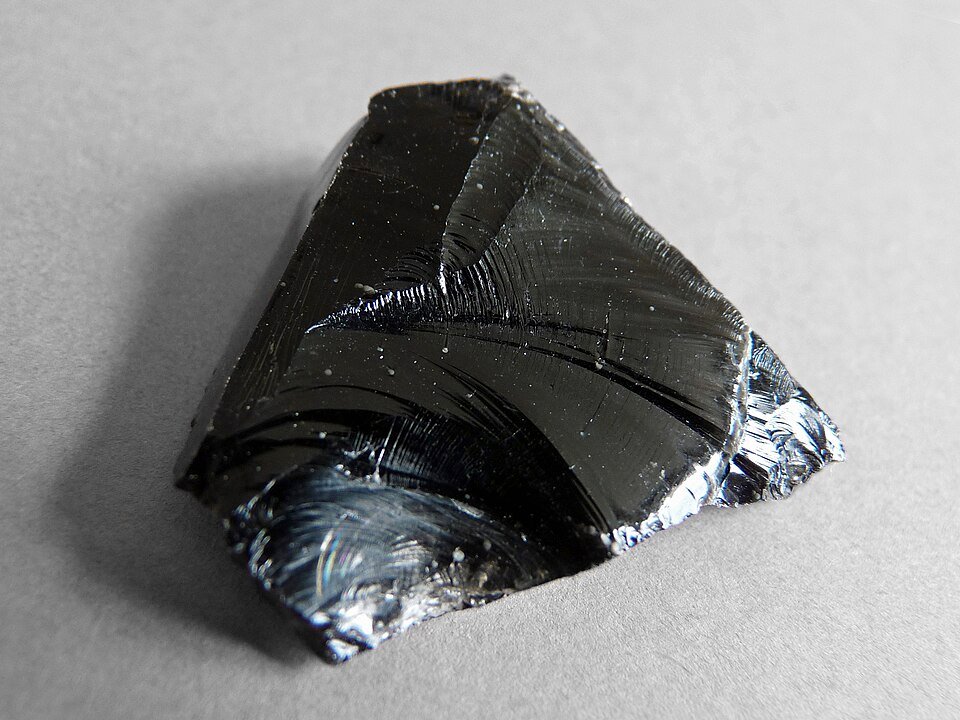
Obsidian ↗
Glassy luster, smooth
Obsidian, based on the sharp conchoidal fracture — but chert is much duller/less glassy and far more common; obsidian is volcanic glass, chert is a sedimentary silica rock.
Where it’s found.
Widespread in limestone formations as embedded nodules; historically prized by ancient peoples worldwide for toolmaking because of its sharp fracture.