
How does hornfels form?
Hornfels is a non-foliated metamorphic rock formed by contact metamorphism — when shale, mudstone, or similar fine-grained rock sits directly against a hot magma intrusion, the intense heat alone (with little to no directional pressure involved) recrystallizes it into a dense, hard rock, destroying the original layering in the process. This is the clearest single rock-page example of contact metamorphism as its own distinct category, alongside the regional metamorphism that produces the foliated sequence (slate through gneiss).
How can you identify hornfels?
Use several clues together.
One photograph shows one specimen, not every variation.
- 01Very fine-grained — individual crystals are far too small to see without a microscope
- 02Hard and dense, often breaking with a splintery, sharp-edged fracture
- 03Dark gray to black, though color varies with the parent rock
- 04Shows no foliation or banding at all — a genuinely useful contrast against slate, its fellow "formed from shale" rock, which foliates because it forms under directional pressure instead
Similar at first glance.
Compare the materials side by side.
Photographs are not shown to the same scale.
Hornfels ↗
Very fine-grained — individual crystals are far too small to see without a microscope
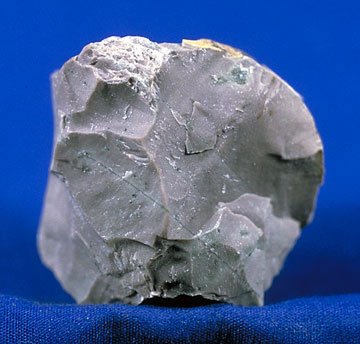
Chert ↗
Very hard (7 on the Mohs scale, like quartz) — will scratch glass
Where it’s found.
More from this family.
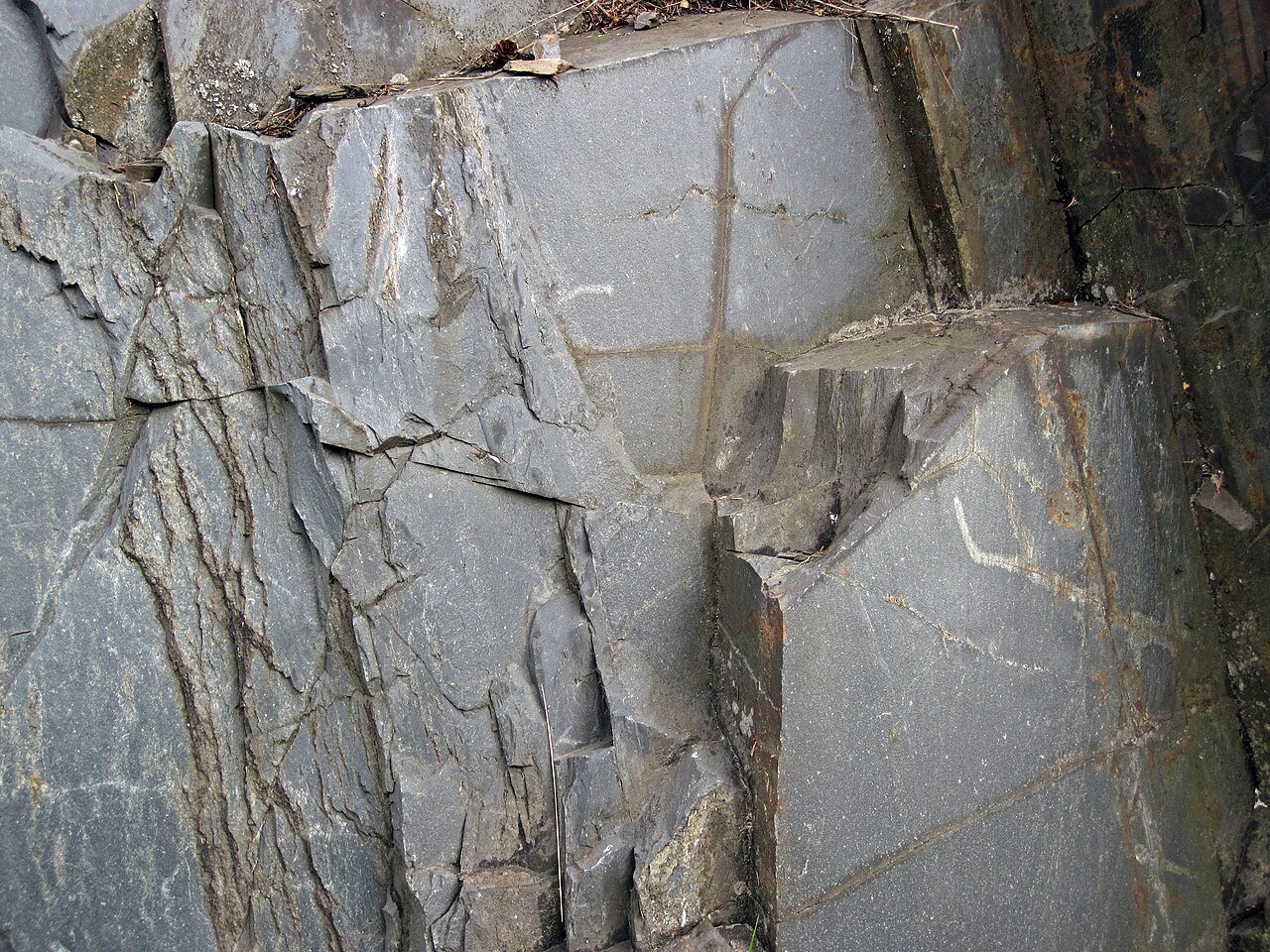
Slate
Splits into thin, flat, smooth sheets — even more cleanly than the shale it came from
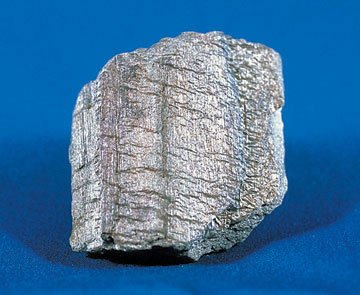
Phyllite
Distinctive silky/satiny sheen (from the small aligned mica crystals) — this is the fastest way to identify it
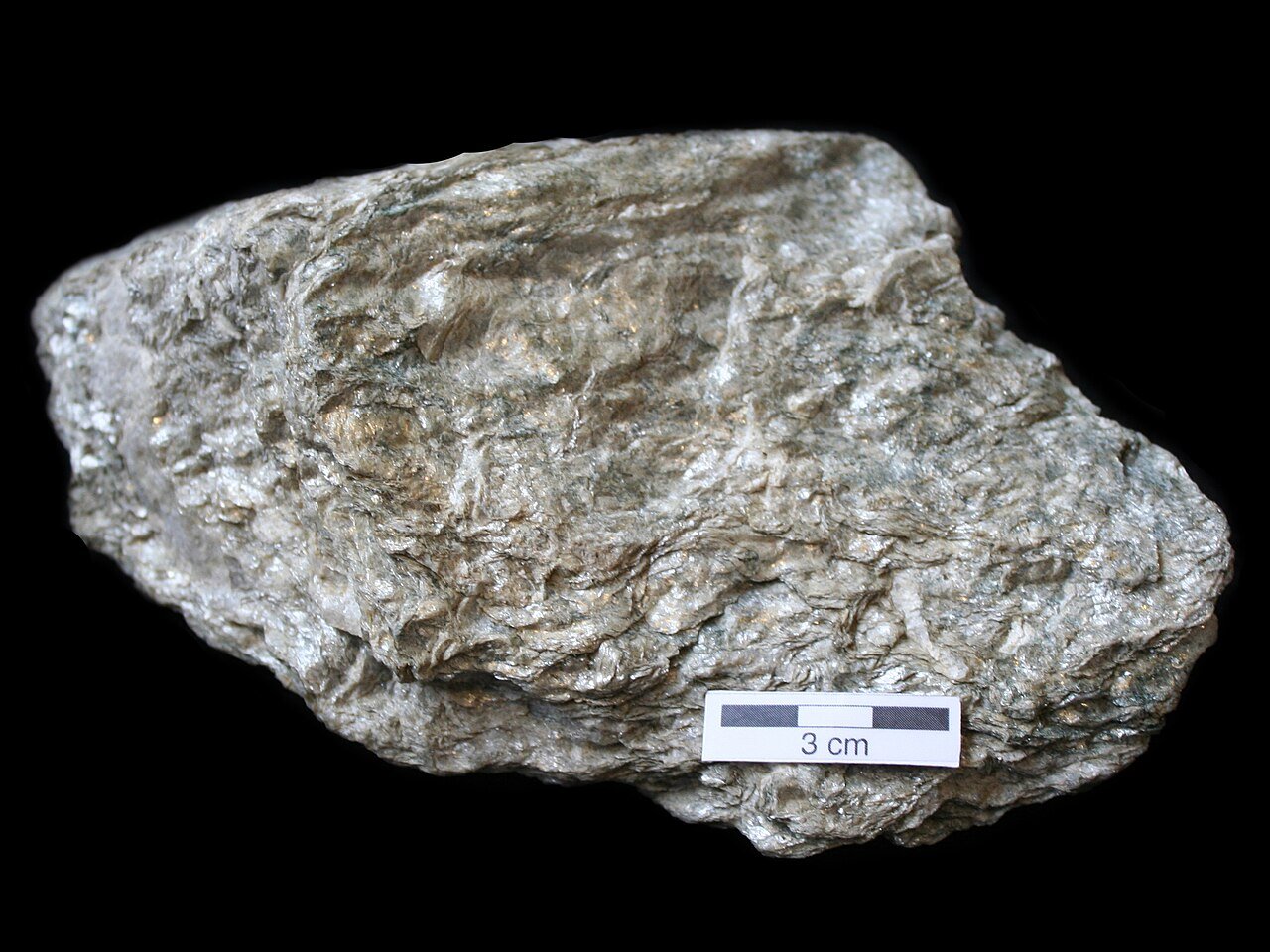
Schist
Visible, large, sparkly mica flakes (or other platy minerals) aligned in wavy layers