
How does amphibolite form?
Amphibolite is a metamorphic rock formed by regional metamorphism of basalt or gabbro — the same broad heat-and-pressure process that builds the foliated sequence from shale, just starting from a dark, iron-and-magnesium-rich igneous parent rock instead. The defining amphibole minerals (commonly hornblende) grow and partially align under the pressure, though often less distinctly banded than the shale-derived sequence.
How can you identify amphibolite?
Use several clues together.
One photograph shows one specimen, not every variation.
- 01Dark: black to dark green
- 02Coarse enough to see individual mineral grains, dominated by dark amphibole (hornblende) crystals, often with lighter feldspar
- 03Sometimes weakly foliated, sometimes closer to non-foliated, depending on how much directional pressure it experienced
Similar at first glance.
Compare the materials side by side.
Photographs are not shown to the same scale.
Amphibolite ↗
Dark: black to dark green
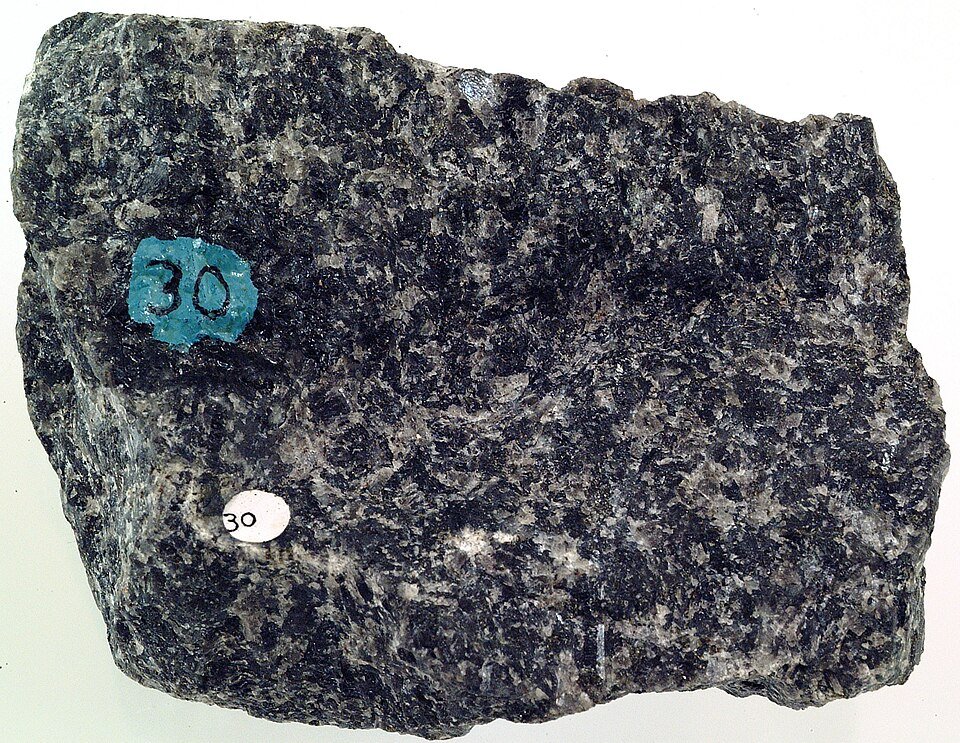
Gabbro ↗
Gabbro, its igneous parent rock — amphibolite's minerals show more alignment/orientation from metamorphism, while gabbro's crystals are randomly arranged.
Where it’s found.
More from this family.
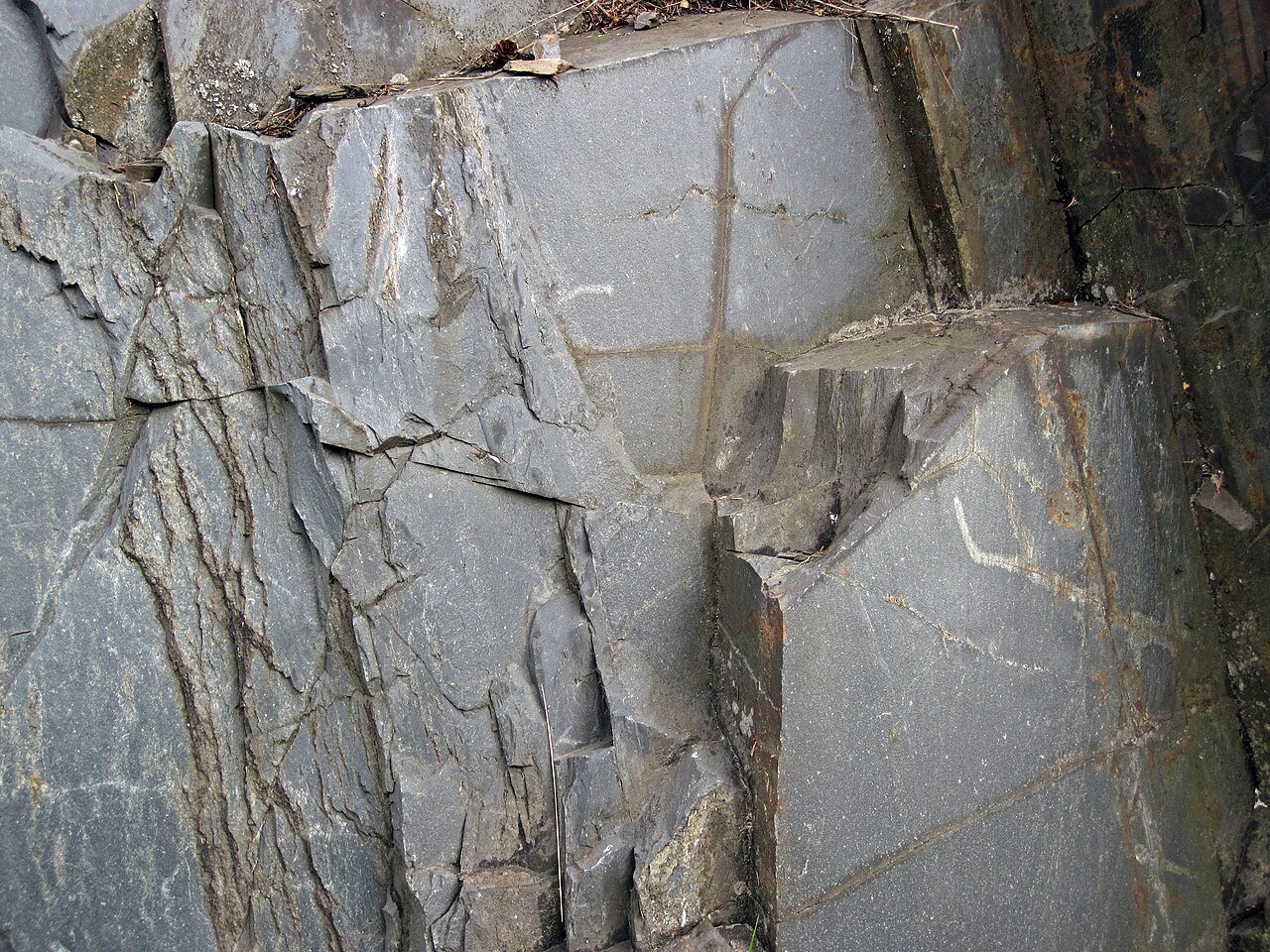
Slate
Splits into thin, flat, smooth sheets — even more cleanly than the shale it came from
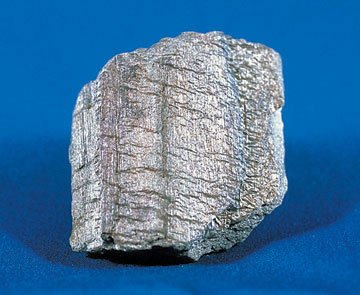
Phyllite
Distinctive silky/satiny sheen (from the small aligned mica crystals) — this is the fastest way to identify it
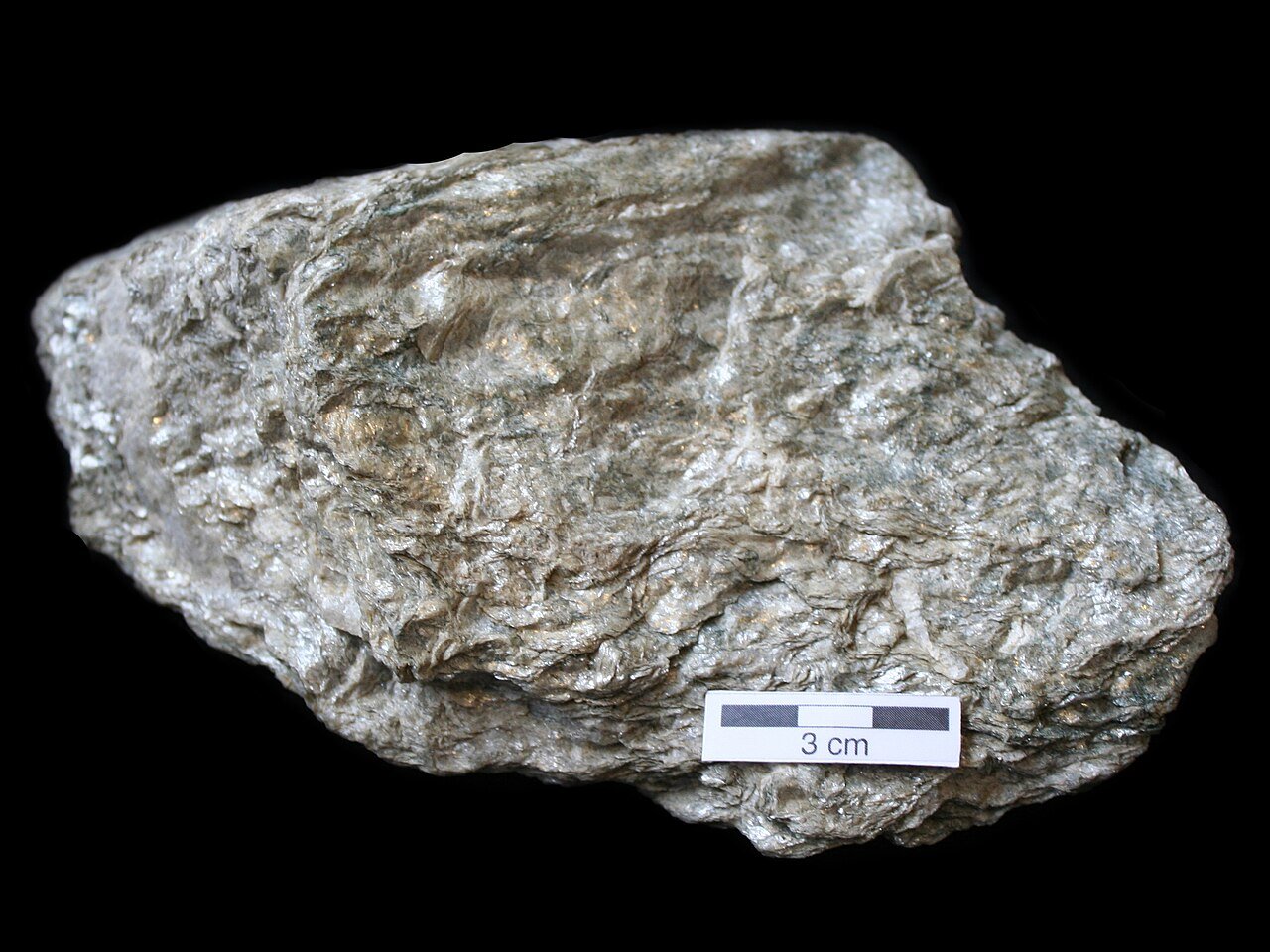
Schist
Visible, large, sparkly mica flakes (or other platy minerals) aligned in wavy layers